
Collecting Stories: Next Generation Collecting with Georgina Adam
Founded with the principles of access and community, CURA Art utilizes a broad network and expertise to support collectors with all aspects of managing their passion and investment.
The aim of the Collecting Stories series is to de-mystify the world of collecting, but also represent the many different approaches to acquiring and supporting the arts. Collecting is so much more than amassing beautiful or interesting works of art and objects; collectors can invest in the future and document the past and present – through this series we hope to bring this to light.
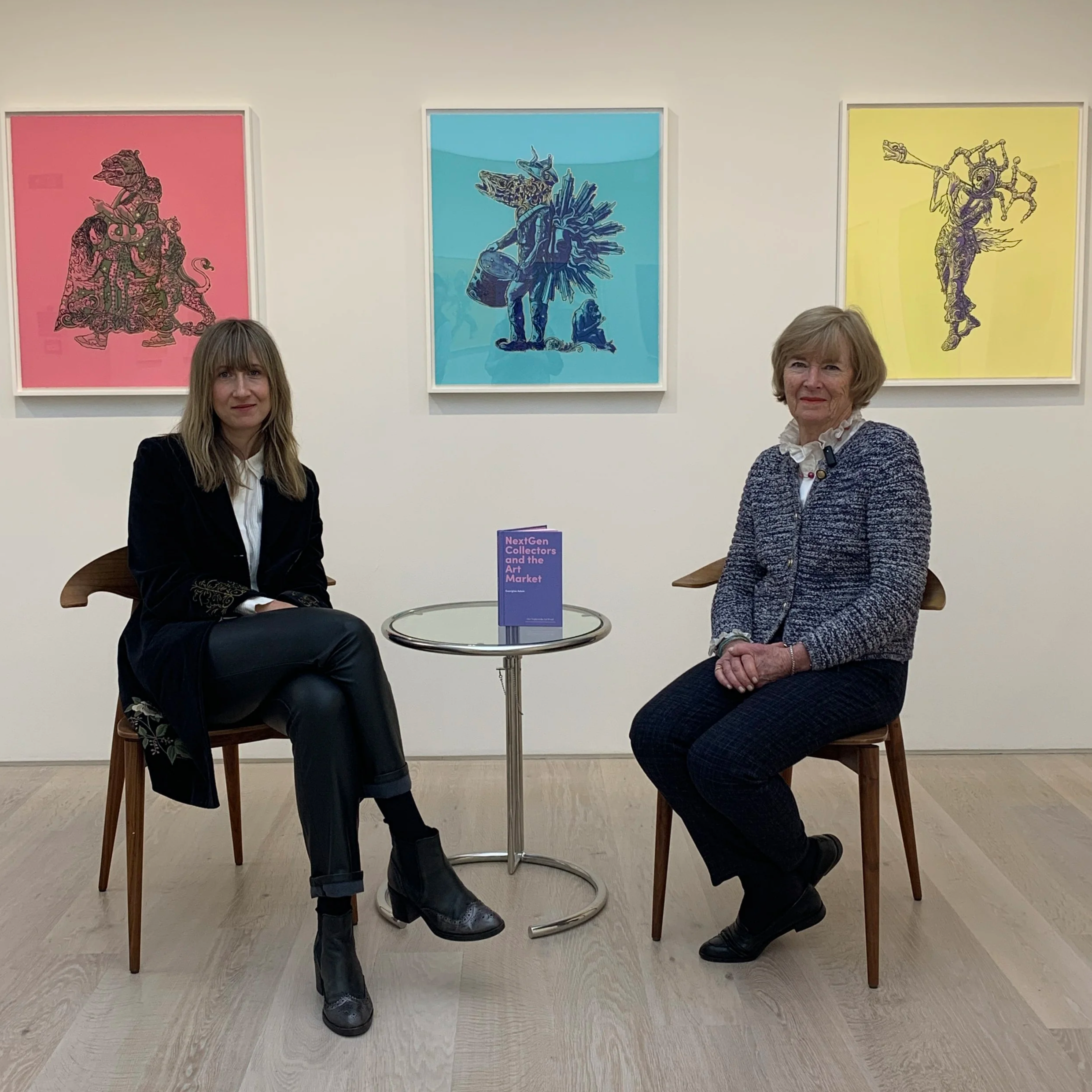
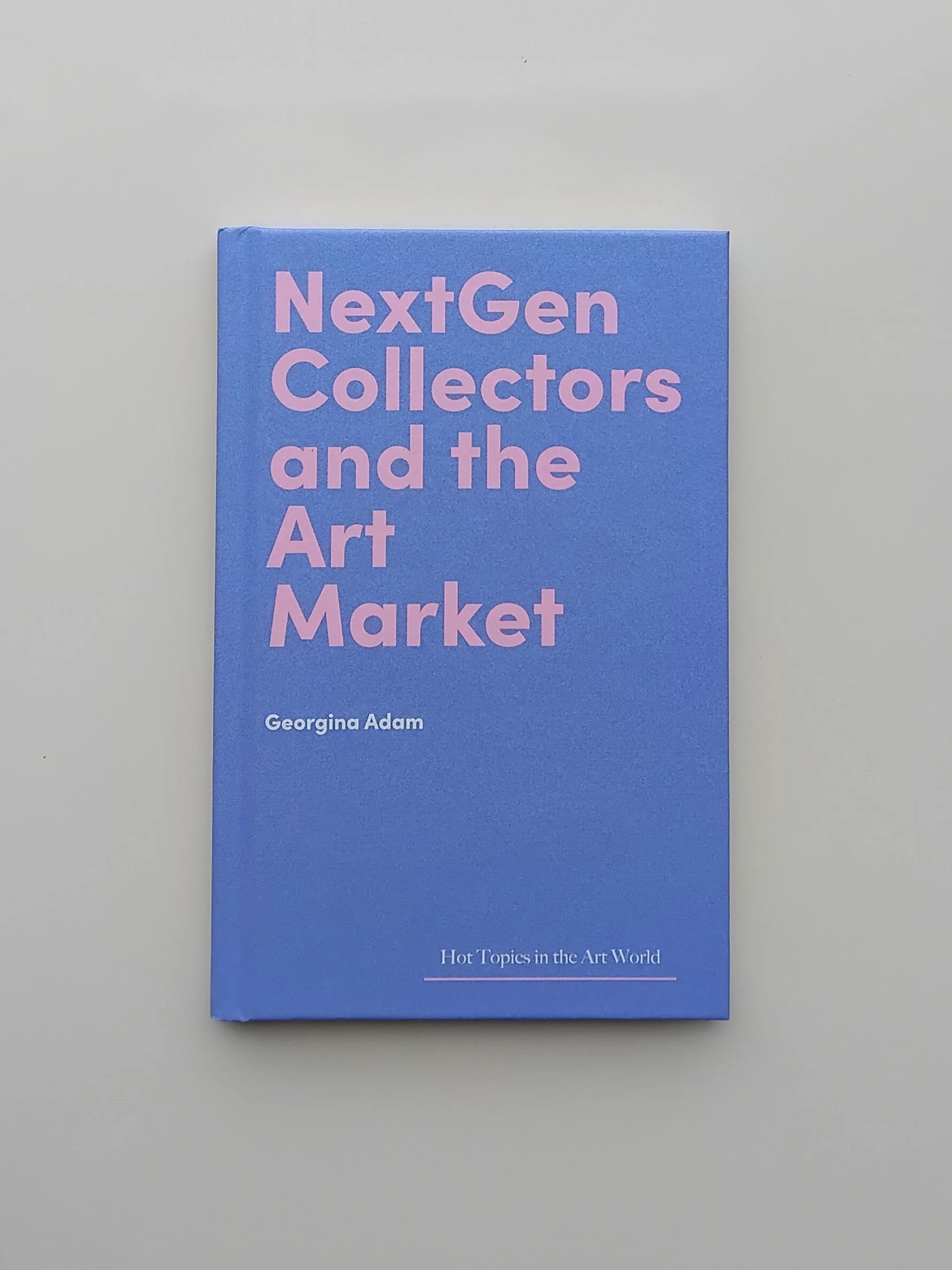
To celebrate the recent launch of her new book ‘NextGen Collectors and the Art Market’ we spoke to art-market commentator Georgina Adam about some trends she recognized through her research. The book was published by Lund Humphries in association with Sotheby’s Institute of Art as part of their Hot Topics in the Art World series and features some comments from CURA Art on the subject of collecting.
This is the first book to focus on the tastes and buying patterns of a new group of dynamic and influential collectors, most of them still under 50, who are shaping the art market today. It is an incisive survey of the changing landscape of art collecting, as a younger generation of collectors disrupts the status quo. Adam examines how changes in collecting trends are being driven by generational shifts in the sources of wealth, as well as the changing tastes and geographies, different motivations, and new modes for acquiring art. These trends are likely to have a profound impact on the ways in which art is bought and sold, as Georgina Adam describes with clarity and insight.
This interview is a section of a longer interview with Georgina, recorded at Cristea Roberts Gallery, London, in March 2026.
Image: Georgia Powell and Georgina Adam at Cristea Roberts Gallery, London, courtesy of Lund Humphries
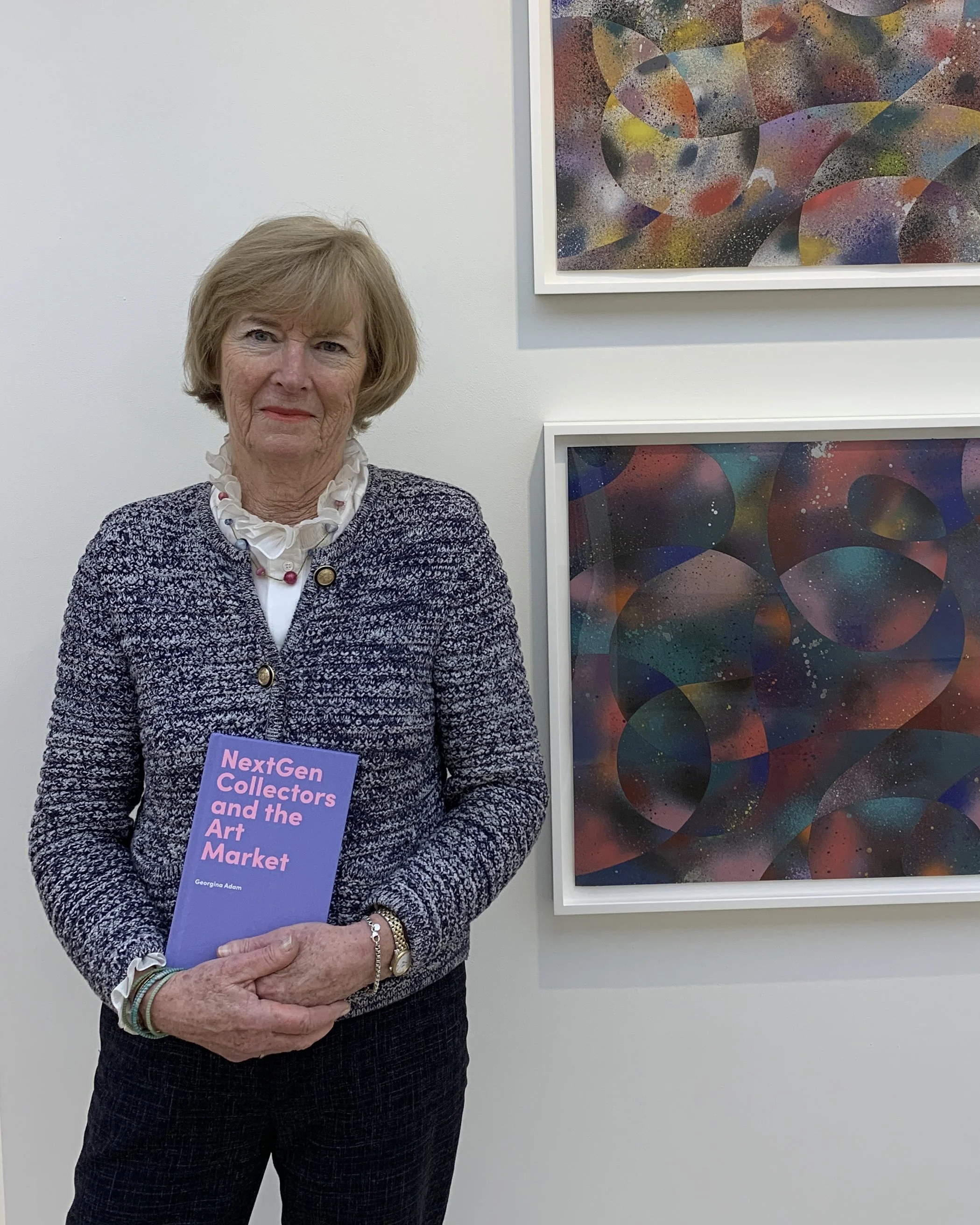
Georgina Adam is a journalist and author who has covered the global art market for over 30 years. She is a contributor to the Financial Times and The Art Newspaper, where she was Art Market Editor from 2000 to 2008 and is now Editor at Large. She is the author of Big Bucks: The Explosion of the Art Market in the 21st Century (Lund Humphries 2014), Dark Side of the Boom: The Excesses of the Art Market in the 21st Century (Lund Humphries 2018) and The Rise and Rise of the Private Art Museum (Lund Humphries 2021).
Georgina regularly interviews Next Generation Collectors for the Financial times, including Sarah Arison and James Whitner.
Image: Georgina Adam at Cristea Roberts Gallery, London, courtesy of Lund Humphries.
How was the art world and market changed in the last 30 years?
It has changed enormously because of two things, the much wider geographic spread and the impact of the internet. Huge new populations (China, India) were able to engage more, and learn about artists and exhibitions, and about the market itself. Fairs came to places like Seoul and people from across Asia came to fairs in the West. The internet allowed so many more collectors to discover artists and see what other collectors like.
What are the key changes to the demographics of collectors over those decades?
It is difficult to generalise but collectors may be much younger, because immense fortunes can even be made by people who are only in their 30s – whereas the previous generation of collectors tended to be older.
How would you define Next Gen collecting?
There isn’t one way to define them, but my research showed that they are more diverse in their tastes and acquisitions, collecting cross categories whereas their elders may have tended to focus on a period, subject or medium. They certainly are interested in interacting with creators – studio visits and so on. The elder generation may have focused on dead artists. All this is broad brush, of course, and there are plenty of exceptions!
What kind of art are NextGen collectors most interested in?
Again, this is difficult to define, but many NextGens are interested in the art of their time that reflects their preoccupations. They may follow influencers and like the immediate impact of works. I am not sure that Agnes Martin, for instance, would have broad appeal for them.
How do you foresee collecting will continue to change?
It will reflect the tastes of a new generation and I think many of the stellar names of the past will not have the same resonance with younger collectors. AbEx artists for example. Cultural references have changed... A Warhol of Liz Taylor is not the same as a Warhol of Marilyn Monroe, because a younger generation may not even have heard of Taylor. So yes, I think collecting will continue to change, but it was perhaps ever thus…transitions of Old Masters to Impressionists then Moderns then contemporary.
What does this mean for the traditional infrastructure of the market? Like Galleries, Auction Houses, etc?
They will all have to adapt to the new desires, tastes and influences of the younger generation. And younger generations are put off by the “exclusive” aspects of some galleries. NextGens are used to having everything when they want it. The trade will have to rethink how to welcome and engage these new buyers.