
Collecting Stories: From passion to profession and forming a Collection in between
Founded with the principles of access and community, CURA Art utilizes a broad network and expertise to support collectors with all aspects of managing their passion and investment.
While many of the collectors we know and work with choose to remain private, several have generously allowed us to share their stories with you, to inspire others and encourage open discussion on the role of the collector in the 21st century.
The aim of the Collecting Stories series is to de-mystify the world of collecting, but also represent the many different approaches to acquiring and supporting the arts. Collecting is so much more than amassing beautiful or interesting works of art and objects; collectors can invest in the future and document the past and present – through this series we hope to bring this to light.
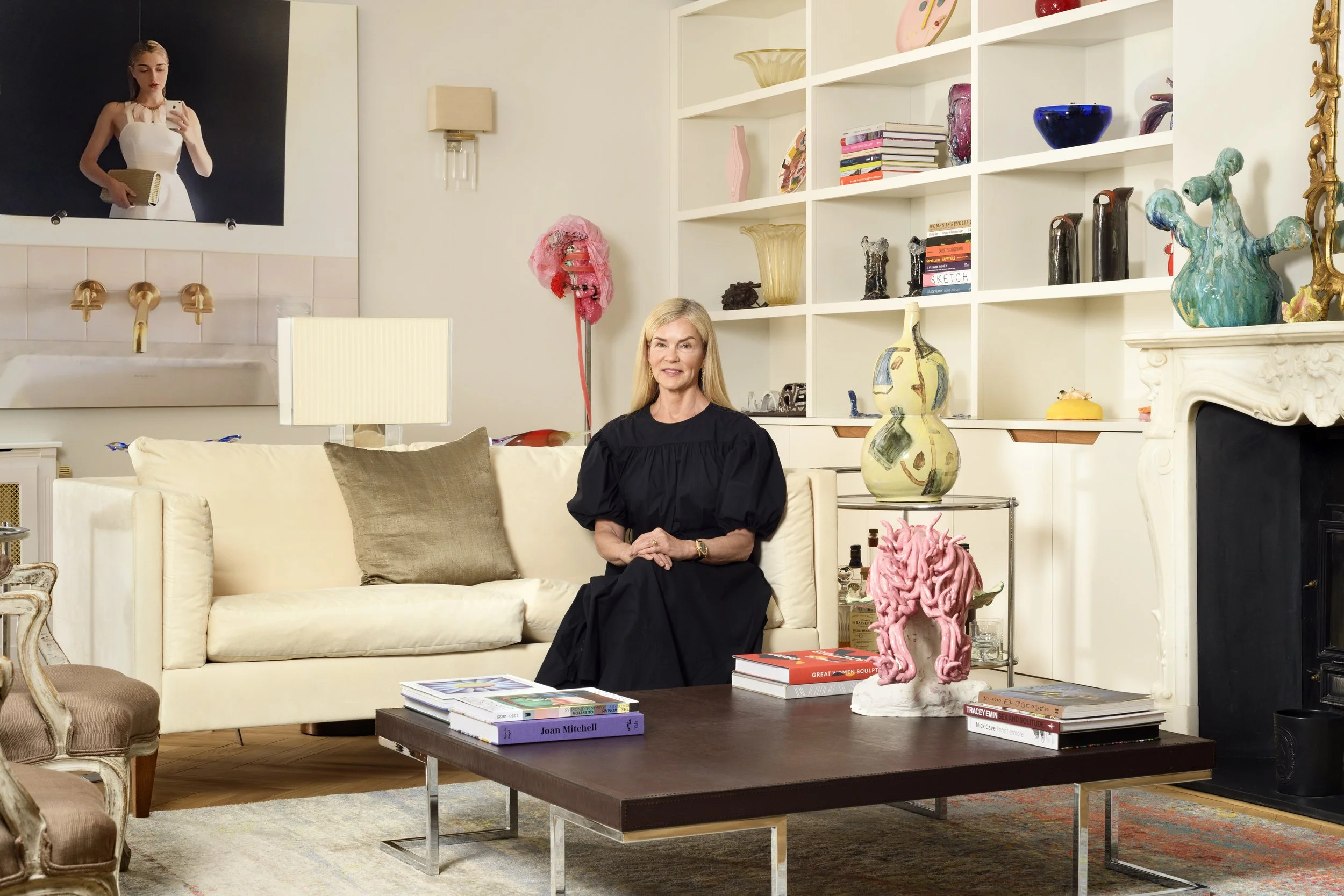
Marcelle Joseph is a London-based American independent curator, artist advisor, collector and patron committed to supporting and empowering women and queer artists. Since 2011, Joseph has produced and curated over 50 exhibitions in the UK and the rest of Europe, featuring the work of over 400 international artists. Joseph holds an MA in Art History with Distinction from Birkbeck, University of London with a specialization in feminist art practice. Her curatorial work focuses on gender and the performative construction of identity. Joseph served as a trustee of Mimosa House in London from 2021-2026 and Matt's Gallery in London from 2018-2022 and served on the jury of the 2017-2019 Max Mara Art Prize for Women, in collaboration with the Whitechapel Gallery. She has been a long-standing ambassador of the Royal Academy Schools since the 2010’s and is a current patron of Camden Art Centre, Hepworth Wakefield, Lightbox, Mimosa House, Modern Art Oxford, and South London Gallery. She collects artworks by early-career women artists under the collecting partnership, GIRLPOWER Collection, as well as more generally as part of the Marcelle Joseph Collection. In 2023, she co-founded the GIRLPOWER Residency in southwestern France, an annual artist residency for female-identifying and non-binary artists.
Current curated project:
Curator of ‘Wabi Sabi: Untangling the Meaning of Beauty’ at the Paul Smith Space in Mayfair, running until 14th September. This group exhibition will feature the work of nine female-identifying artists, such as Sophie von Hellermann, Lindsey Mendick and Gal Schindler, who seek beauty in balance and harmony as well as the imperfection of life.
Image: Marcelle Joseph in her drawing room at home in Ascot. Photo: Thierry Bal.
Define your collection in three words.
Bodily, mythical, performative.
You collect within a very specific framework; artworks by female-identifying and queer artists. What else do you look for in a piece to make it appropriate for your collection? Do you have a sort of checklist or are you more instinctive?
Here is my checklist.
First, the work must be by a woman or queer artist who explores their own embodied experience in the world.
Second, the work must be priced at £7,500 or under as this is a strictly enforced maximum per artwork for the collection that forces me to support artists at the beginning of their careers. This does not mean that I only collect young artists as many marginalised artists lack the visibility they deserve and come to light later in life.
Third, the particular work I want to acquire must pass the gut instinct test. I need to wake up every morning and go to bed every night thinking about that artwork for several days in a row.
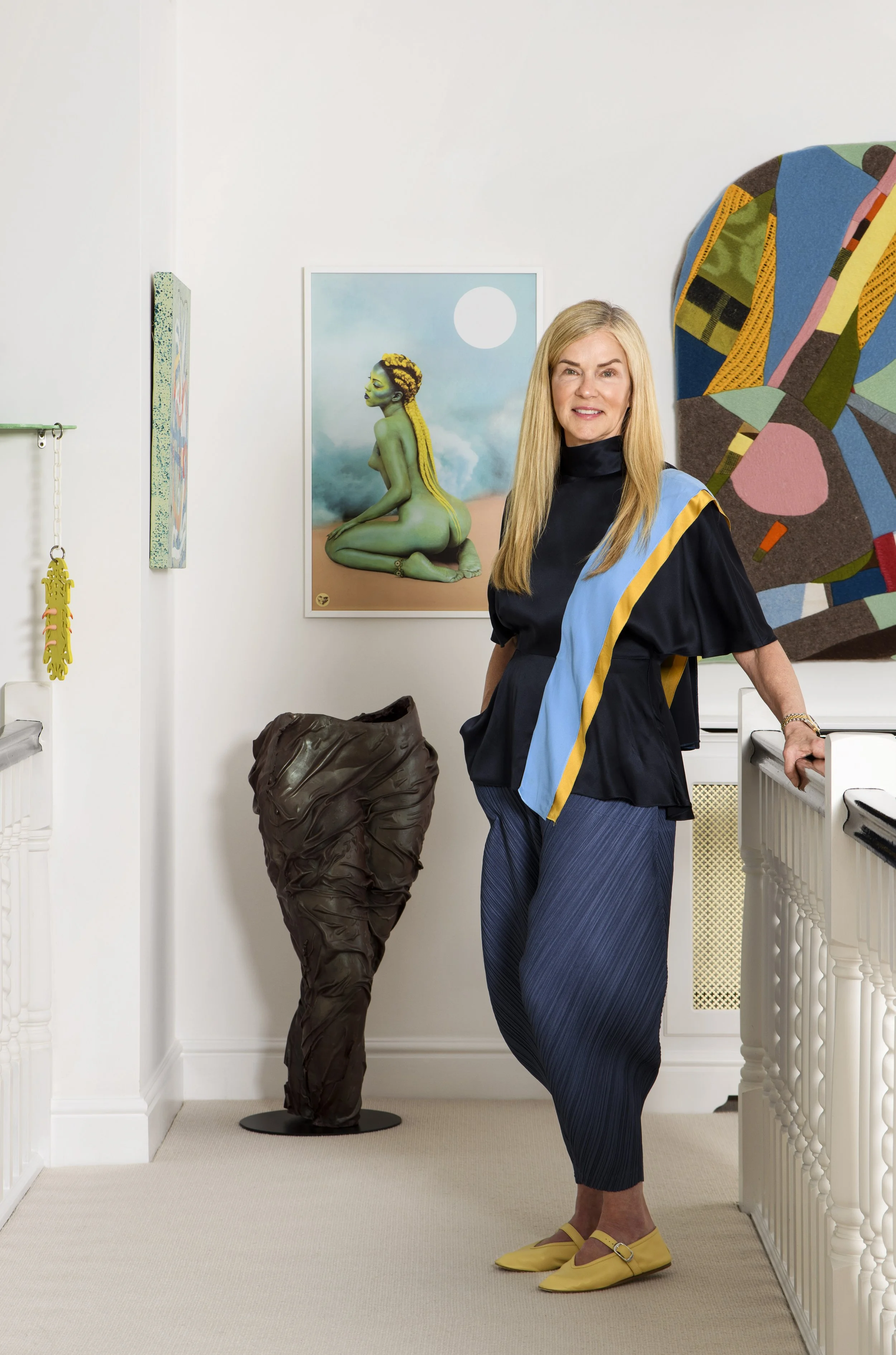
Image: Marcelle Joseph at home in Ascot with works left to right by Hannah Lim, Merike Estna, Juliana Huxtable, Jala Wahid and Sophie Giller. Photo: Thierry Bal.
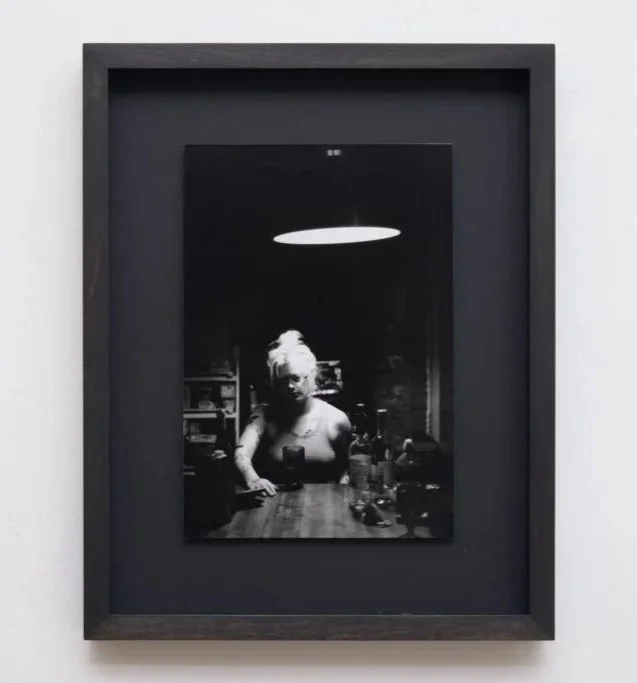
Fourth, the work must fit within the collection as a whole. I am collecting more slowly these days so I look for interesting dialogues between works or connections to my own academic interests in feminist and queer theory as well as the performativity of gender. For example, I recently acquired a Rene Matić photograph that quoted from one of my favourite feminist artists’ series – the 1990 Kitchen Table series by Carrie May Weems. I installed this work nearby to three photographs from the great British feminist artist Helen Chadwick’s 1977 In the Kitchen series. These photographs by Chadwick also featured in an exhibition I co-curated in 2023 titled ‘Bodily Poetics’ where nine historic feminist artists working in the 1970s and 80s were paired with a contemporary artist working today. Chadwick was paired with British artist Rosie Gibbens who performed on the opening night of that exhibition. I later acquired Gibbens’ performance costume. So piece by piece, the collection weaves together across my artist networks, academic research and curated exhibitions.
Image: Rene Matić, Mia at their Kitchen Table (2025), 36 x 28.5 x 3.2 cm, Edition 1/3 + 2 artist’s proofs, gelatin silver print, artist’s frame. Courtesy of the artist and the Marcelle Joseph Collection,
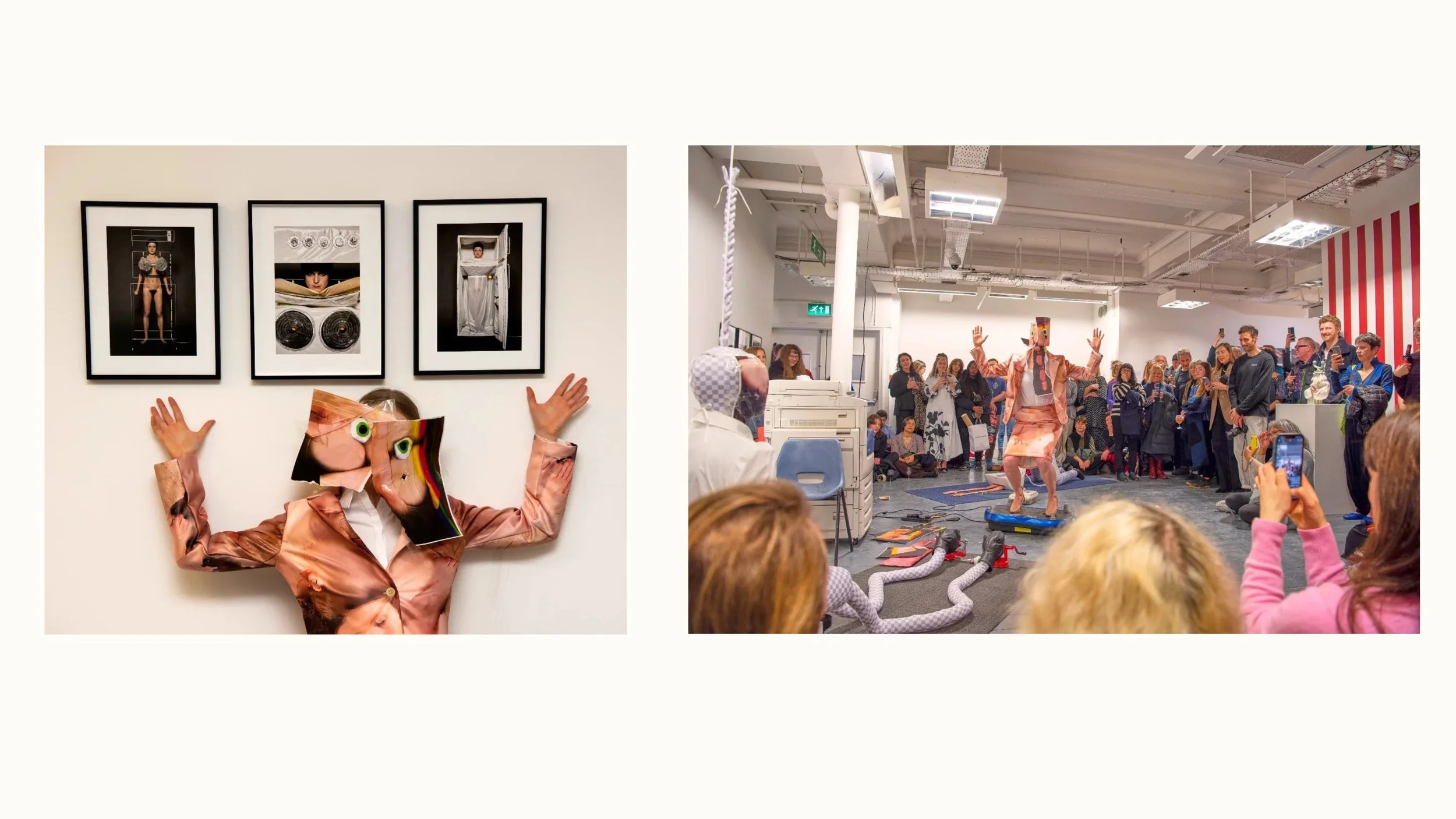
Images: Installation view of Helen Chadwick, In the Kitchen Series (1977) at Bodily Poetics (co-curated by Marcelle Joseph and Becca Pelly-Fry), GIANT, Bournemouth, 2023 with Rosie Gibbens after her performance on the opening night. Rosie Gibbens at her performance on the opening night of Bodily Poetics (co-curated by Marcelle Joseph and Becca Pelly-Fry), GIANT, Bournemouth, 2023.
Have any works deviated from your framework because of a coup de Coeur? If so which piece?
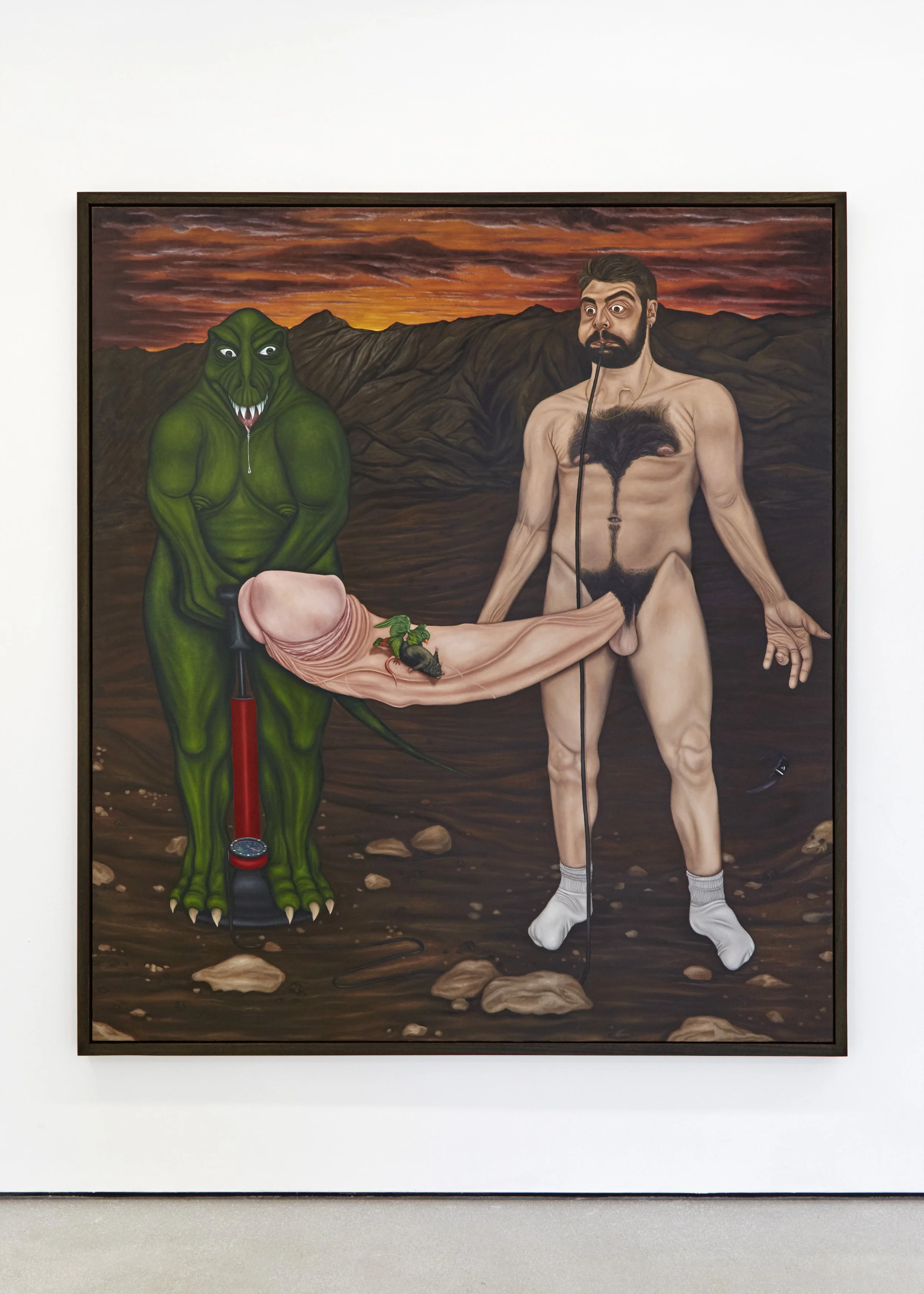
My artist networks precede the narrowing of my collecting focus to work made by women and queer artists so I have continued to collect sporadically work by straight white dudes like my favourite Glen Pudvine. I’m sure he won’t be offended by me calling him that. I acquired two works from his two-person show at Quench Gallery in Margate in 2021 but I wish that I would have bought a work I showed in an exhibition I curated at Lychee One in 2019 titled ‘Young Monsters’. This group exhibition of work by four male-identifying artists (including Pudvine) explored the myriad versions of masculinity performed across the gender spectrum. It pronounced toxic masculinity as dead. Luckily, this work is owned by a friend of mine so I can always visit it.
Image Installation view of Glen Pudvine’s Dawn (2019) at Young Monsters (curated by Marcelle Joseph), Lychee One, London, 2019.
How do you go about sourcing pieces? Any tips for our readers on how to approach the ever-changing art market?
I canvas the entire gamut of sources for art, other than auctions and the secondary market. Commercial galleries, artist-run spaces, art fairs, degree shows, Instagram. In terms of degree shows, the Slade, RA Schools and RCA are my faves and I tend to focus on MA degree shows. But last year, I even acquired a work by Ada Bond from her Slade BA Degree Show.
I don’t discriminate on where I source artwork for my collections although I do have my favourite London galleries like Arcadia Missa, Hannah Barry and Cooke Latham. And sometimes I curate shows at these galleries – a highlight in my career was curating the first PROUDICK exhibition at the Hannah Barry Gallery in 2018. It was the first collaborative show of many by best friends and co-conspirators Lindsey Mendick and Paloma Proudfoot.
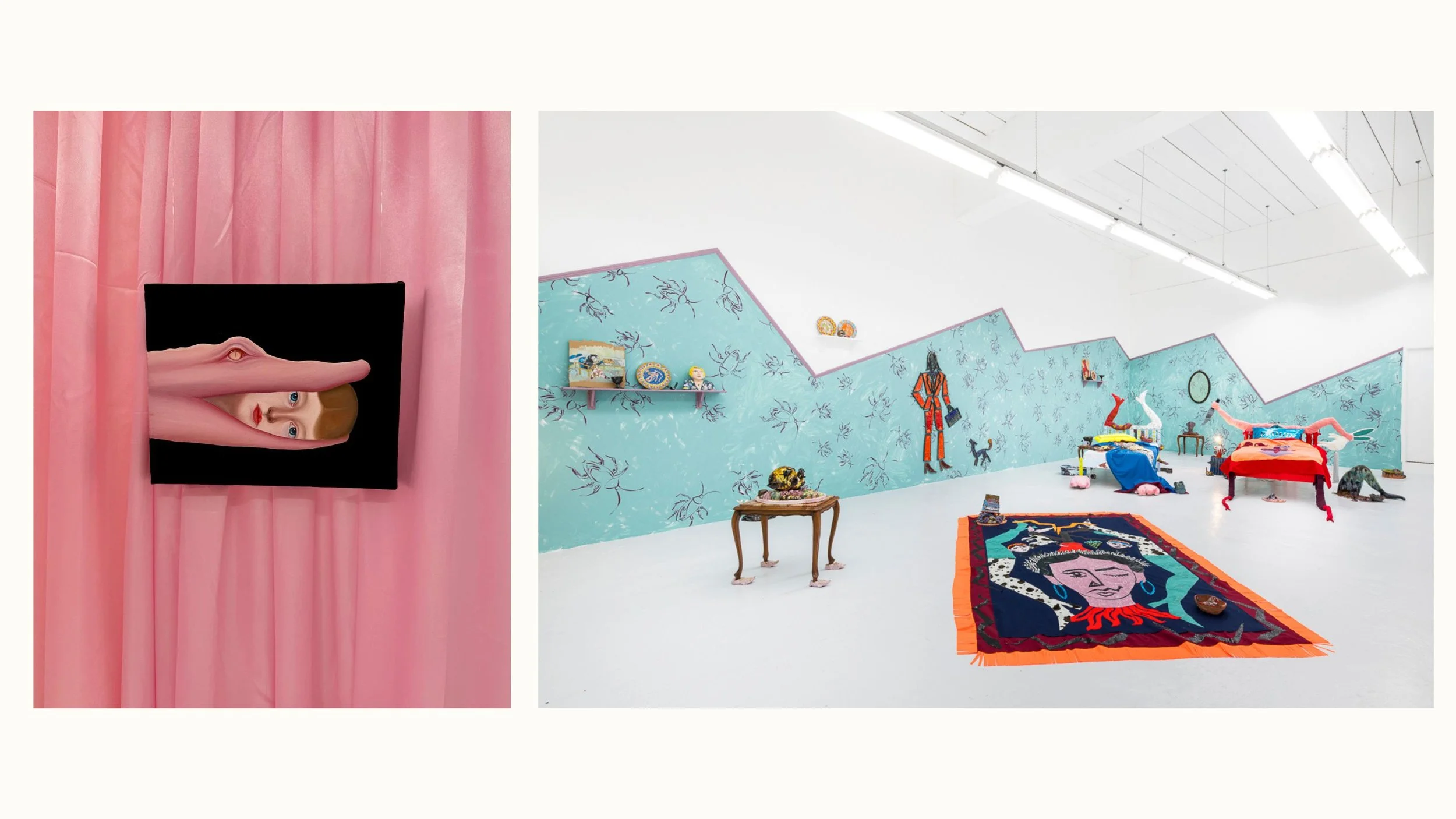
Images: Installation view of Ada Bond’s Bender (2025) at the Slade BA Degree Show, London, 2025. Installation view of PROUDICK (curated by Marcelle Joseph), Hannah Barry Gallery, London, 2018. Photo: Damian Griffiths.
What was your most recent acquisition and why did you feel it fitted your collection?
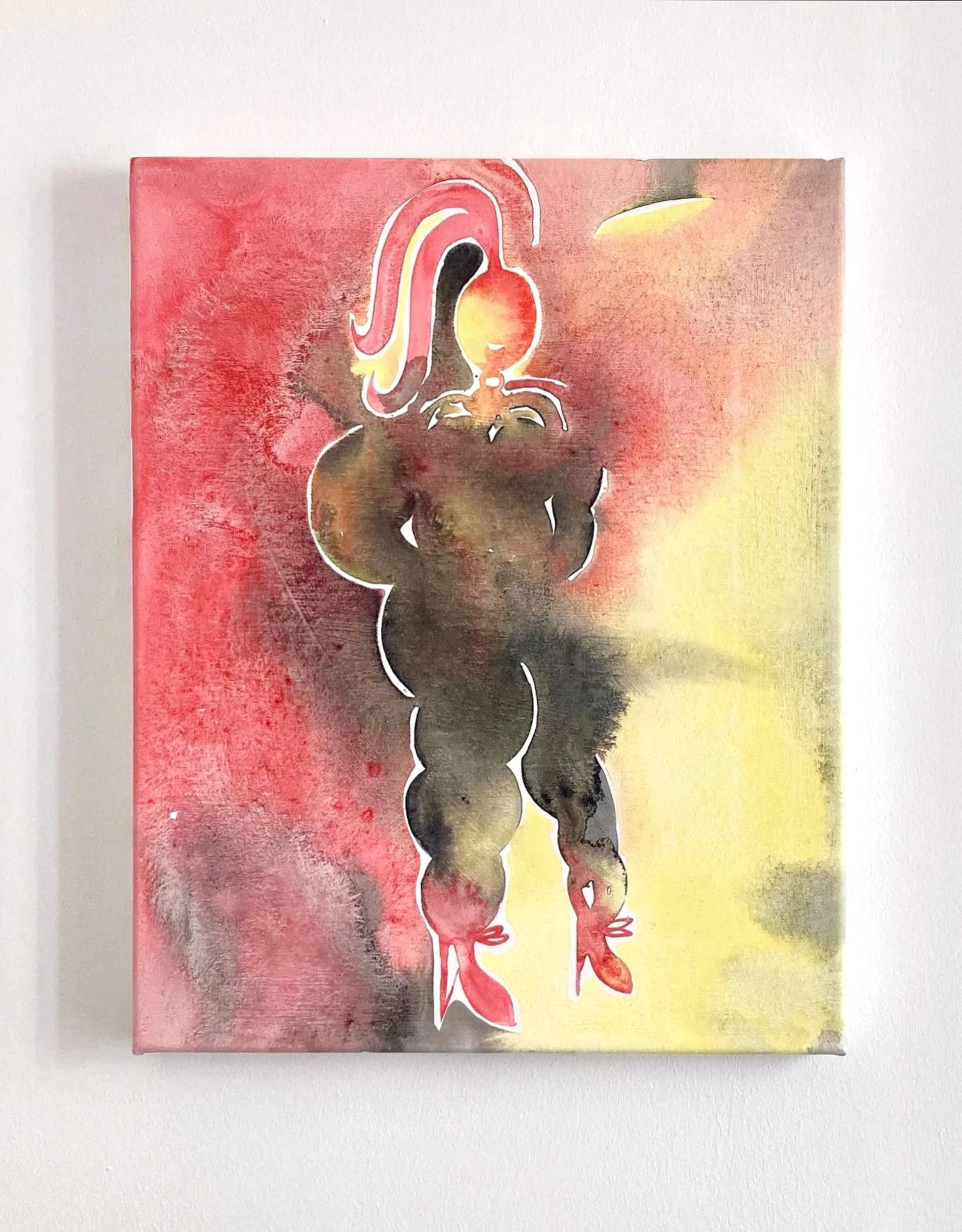
I recently acquired a work by Zurich-based British artist Susie Green titled ‘Maîtresse’. Her work is also in my current curated project at the Paul Smith Space in Mayfair – a group show titled ‘Wabi-Sabi: Untangling the Meaning of Beauty’, featuring the work of nine women artist who seek beauty in the imperfection of life. This show runs until 14 September 2026 if you would like to see it. Green’s work fits perfectly into my collection as the artist depicts powerful feminine figures taking up space unapologetically! Her works are both a self-portrait and a broader reflection of female-presenting confidence.
Image: Susie Green, Mâitresse (2023), acrylic on cotton canvas, 50 x 40 cm. Courtesy of the artist and the Marcelle Joseph Collection.
You lend and publicly display your collection. How do you make it feel alive and make sure you get the most enjoyment from it?
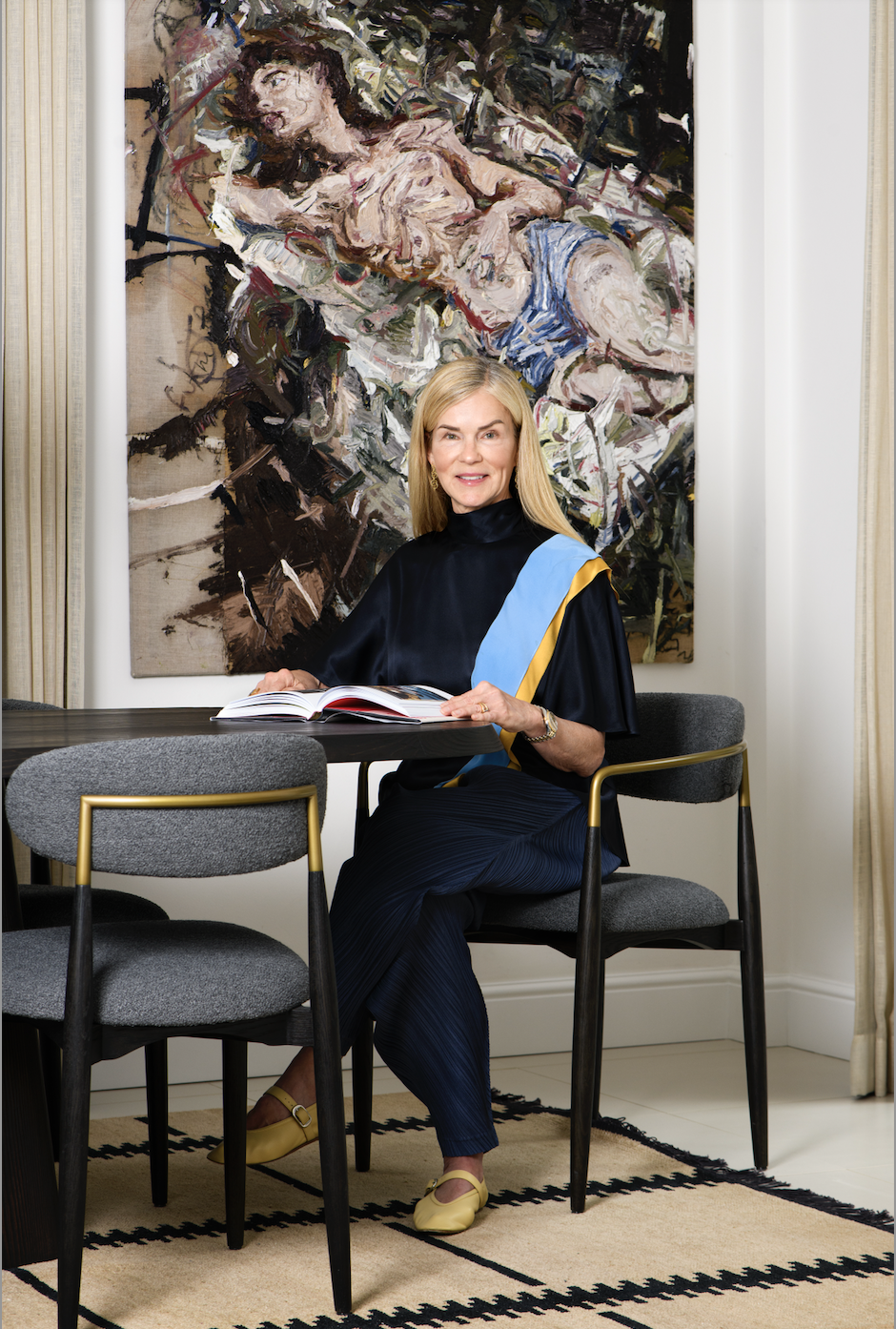
The collection really comes alive in my home in Ascot as I rehang parts of the house every six to nine months, creating new conversations between artworks and across time and space. I love a great intergenerational dialogue! I also love to show off new works to the collection like the Joanna van Son painting in this portrait.
I have partnered with two regional museums in the UK on exhibitions that featured their collection alongside my own: the Rugby Art Gallery & Museum in 2022 and the Stanley & Audrey Burton Gallery at the University of Leeds in 2023-24. These experiences were very rewarding for me as I was asked to co-curate the exhibitions too. Working with my own collection was such a layered experience for me as I could step outside and view my collection as a curator as well as knowing the personal stories that inform the collection as the collector. Luckily, my collection has another museum outing next year at The Lightbox in Woking where I will curate an exhibition of work from my collections and the Ingram Collection of over 600 works of modern British art.
Image: Marcelle Joseph at home with Joanna van Son painting. Photo: Thierry Bal.
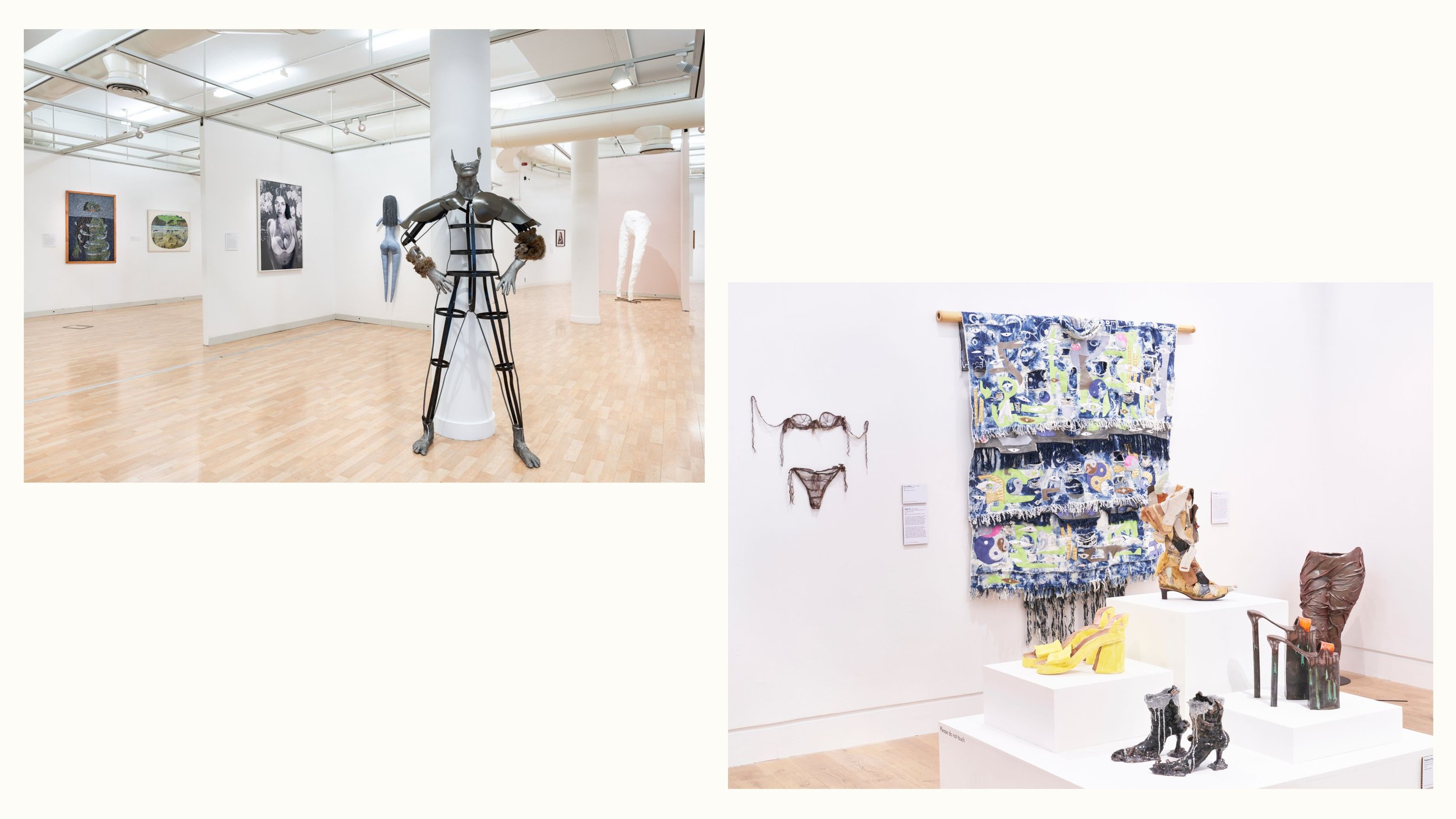
Images: Installation view of Body en Thrall (co-curated by Sarah Holdaway and Marcelle Joseph), Rugy Art Gallery & Museum, 2022. Photo: Damian Griffiths. Installation view of Contested Bodies (co-curated by Laura Claveria and Marcelle Joseph), Stanley & Audrey Burton Gallery, University of Leeds, Leeds, UK, 2023-24. Photo: Justin Slee.
I try to lend works from my collection as much as possible. Anna Perach’s tufted wool sculpture Baba Yaga (2018) flew across the globe to a museum in Queensland, Australia in 2023, and her Transformer sculpture (2021) has been lent four times. It was on display in the Netherlands at Kunstfort Vijfhuizen as part of a group exhibition titled ‘The scuffle of the cuddle cage’ that finished on 31 May 2026 so I am eagerly awaiting this work to come back home.
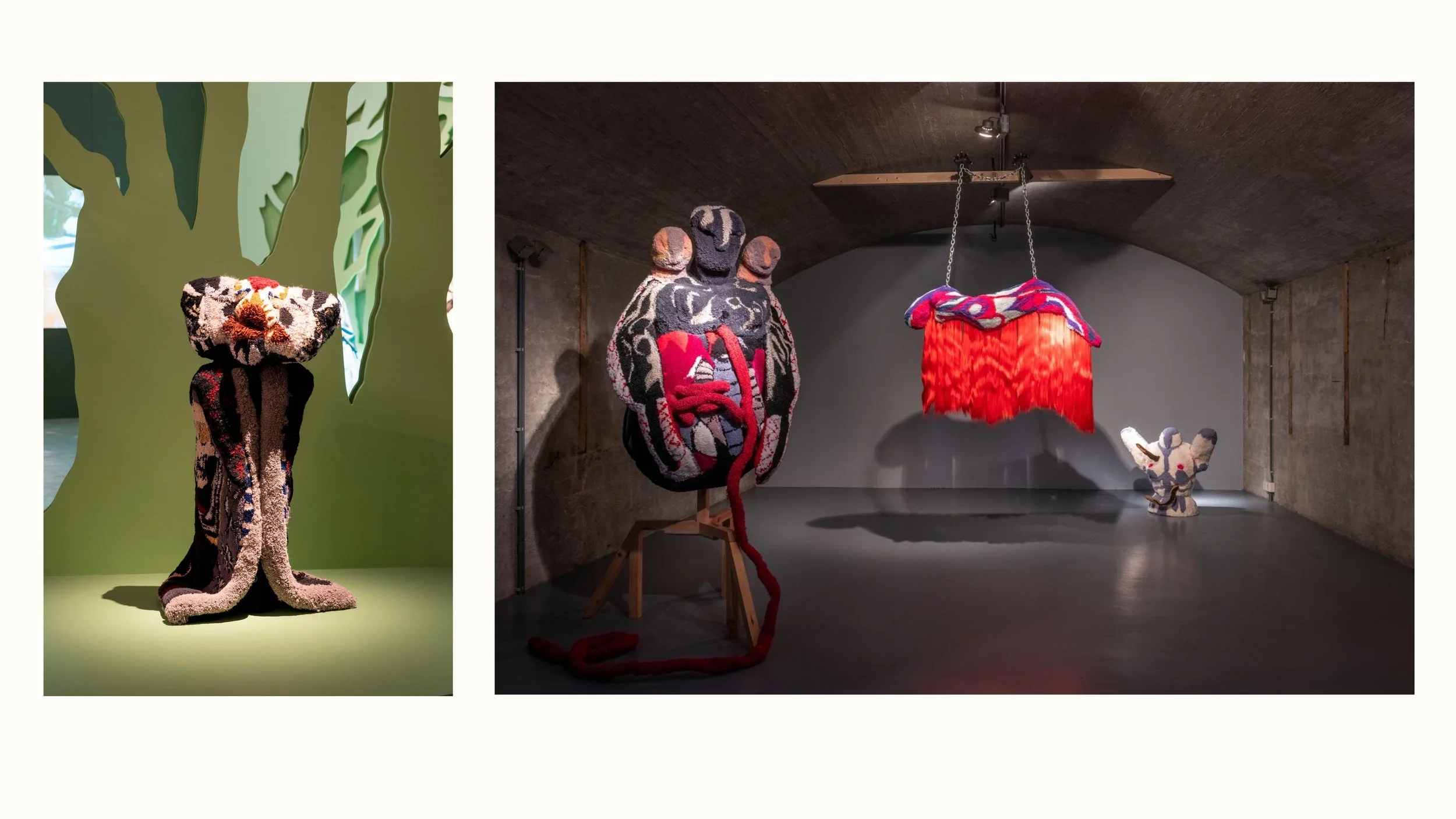
Images: Installation view of Anna Perach’s Baba Yaga (2018) at Fairy Tales, Queensland Gallery of Modern Art, Queensland, Australia, 2023-24.
Installation view of Anna Perach’s work, including Transformer (2021) (on floor on right) at The scuffle of the cuddle cage, Kunstfort Vijfhuizen, the Netherlands, 2026.
People are often put into a specific box in the art world, but you question that. How does your collecting sit alongside curating exhibitions?
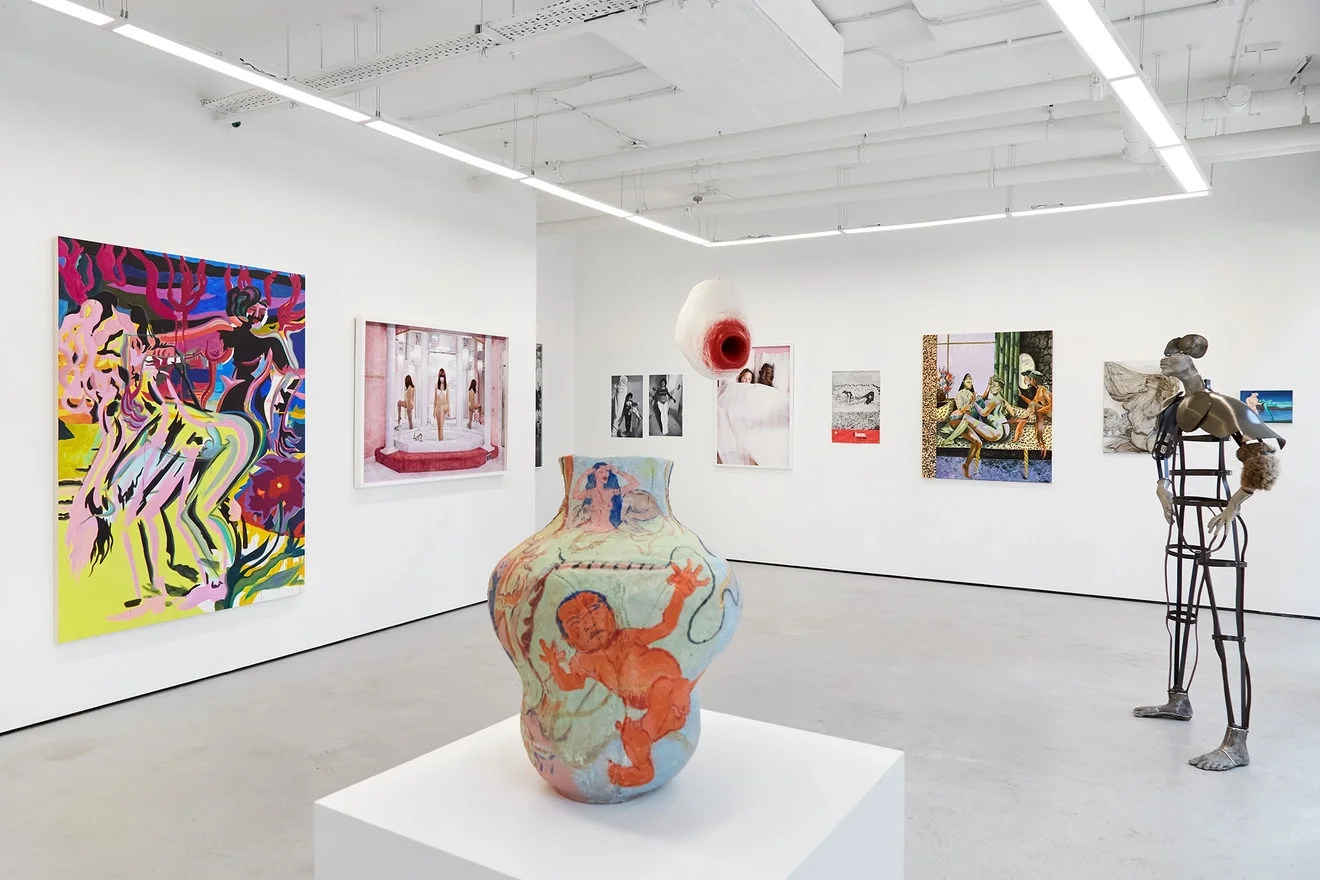
Curating came before collecting for me back in 2011 but the two have always gone hand in hand. I sometimes curate shows with artists from the collections and I collect artworks from exhibitions I curate or by artists who I have worked with in the past. Across both activities, I platform and support these artists throughout their careers. One early example was current Turner Prize nominee Kira Freije. I acquired a sculpture from her degree show at RA Schools in 2016 and then another work in 2019. In 2020, I included that 2019 work in a group exhibition I curated titled ‘Monster Beauty: An Exploration of the Female/Femme Gaze’, alongside the likes of Hannah Wilke, Tai Shani, Zanele Muholi, Lisa Brice and Yayoi Kusama. Fast forward to today, I have just chaired the Exhibition Circle for her current touring solo show at Modern Art Oxford, the same exhibition for which she was nominated for this year’s Turner Prize at the Hepworth Wakefield.
Image: Installation view of Monster Beauty (curated by Marcelle Joseph), Lychee One, London, 2020 with work from left to right by Mira Dancy, Juno Calypso, Rafaela de Ascanio (sculpture on plinth), 1960’s archival photographs of Alina Szapocznikow, Tai Shani (hanging sculpture), Mary Stephenson, Yayoi Kusama (1998 MOMA poster), Jessie Makinson, Hannah Murgatroyd, Kira Freije (standing sculpture), and Sara Anstis.

Could you tell us about the GIRLPOWER Residency?
The GIRLPOWER Residency was dreamt up in 2022 when I visited Pech Gris, the summer home of my collecting partner in the GIRLPOWER Collection in southwestern France. I collect in two different strands: my personal collection, which numbers over 350 works, and the GIRLPOWER Collection, a 50/50 collecting partnership I founded with my friend Kimberly Morris in 2012. We collect the work of only early-career female-identfiying and non-binary artists. This collection numbers 50 works.
In 2023, after over a decade of collecting together, Kimberly and I decided to pivot our activities and set up an artist residency at Pech Gris in the Lot-et-Garonne region of France. We have called it the GIRLPOWER Residency after our collection. For one month a year, we invite three female-identifying or non-binary artists to escape from their busy urban lives and decamp to the rural countryside of the Aquitaine. Last September was the third edition of the residency. So this is the way that Kimberly and I have decided to continue the GIRLPOWER Collection through the acquisition of work by the three artists in residence each year. This residency is supported with a fee to each artist as well as a materials budget to afford the artists who have part-time jobs the chance to participate as well.
After each residency, I attempt to show the artists’ work in a group exhibition in London. The show for the 2025 GIRLPOWER Residency just finished in April 2026 at the SLQS Gallery in Shoreditch.
Image: 2024 artist-in-residence Melania Toma in the summer kitchen studio at the GIRLPOWER Residency, Salles, France, 2024
Is building relationships with artists that you collect important to you?
Absolutely! I don’t call my collection ‘a collection of conversations’ for nothing. Over 90% of the works in my collection were made by artists I know either through visiting them in their studios, curating their work in an exhibition or meeting them at their openings or artist talks. For example, works by Saelia Aparicio, Lindsey Mendick and Paloma Proudfoot that were exhibited in ‘Dancing at the Edge of the World’, a group show I curated at a commercial gallery in Rome in 2020, made it into my collections. The knowledge and insights I have gained through these relationships nourish my soul. I wouldn’t be a collector without them.
Building on my deep relationships with artists in my network, I have just launched Marcelle Joseph Advisory, an invitation-only advisory programme for women and queer artists. This service is geared toward artists at any stage of their career who want to accelerate or reposition their career through direct, curated access to my established network of collectors, institutions, gallerists, residency providers, and writers. I will work with no more than a handful of artists at any time for a six or nine month period, giving each of them direct supported feedback with curatorial and collector insight into their practice, strategic mapping of their career, more visibility with key players in the contemporary art world, and a bespoke road map for them to execute even after the initial advisory period.
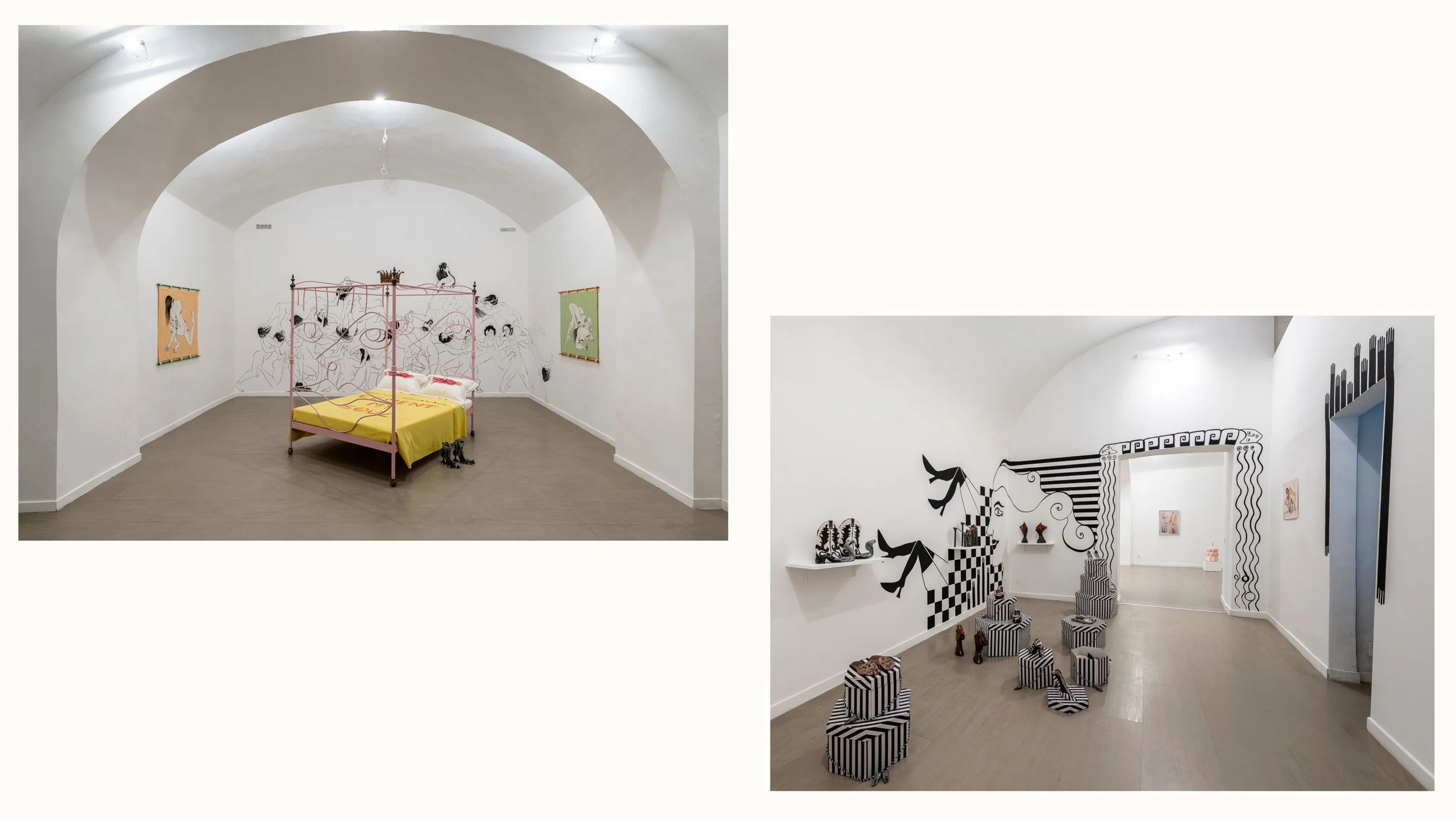
Images: Installation view of Dancing at the Edge of the World (curated by Marcelle Joseph), z2o Sara Zanin Gallery, Rome, Italy, 2020. Photo: Sebastiano Luciano
Do you have a collector (dead or alive) that you admire and take inspiration from?
I would have to say Peggy Guggenheim although I have not slept with any of the artists in my collection!! But I do admire her early days in 1938 when she ran a gallery on Cork Street in London that shocked the conservative tastes of the British art establishment. She hosted over 20 exhibitions there, so she too was a curator as well as a collector. After WWII erupted, she decamped to New York and opened the Art of This Century gallery, a bastion for struggling young artists. There is one exhibition that took place in New York in 1943 that I am very enamoured with: Exhibition by 31 Women. It was later restaged in 2017 by a young (now defunct) gallery in London called Breese Little and featured work by successive generations of women practitioners from the 1940s to the present day. I have a lovely memory of acquiring a hanging latex painting by British artist Aimee Parrott from that show.
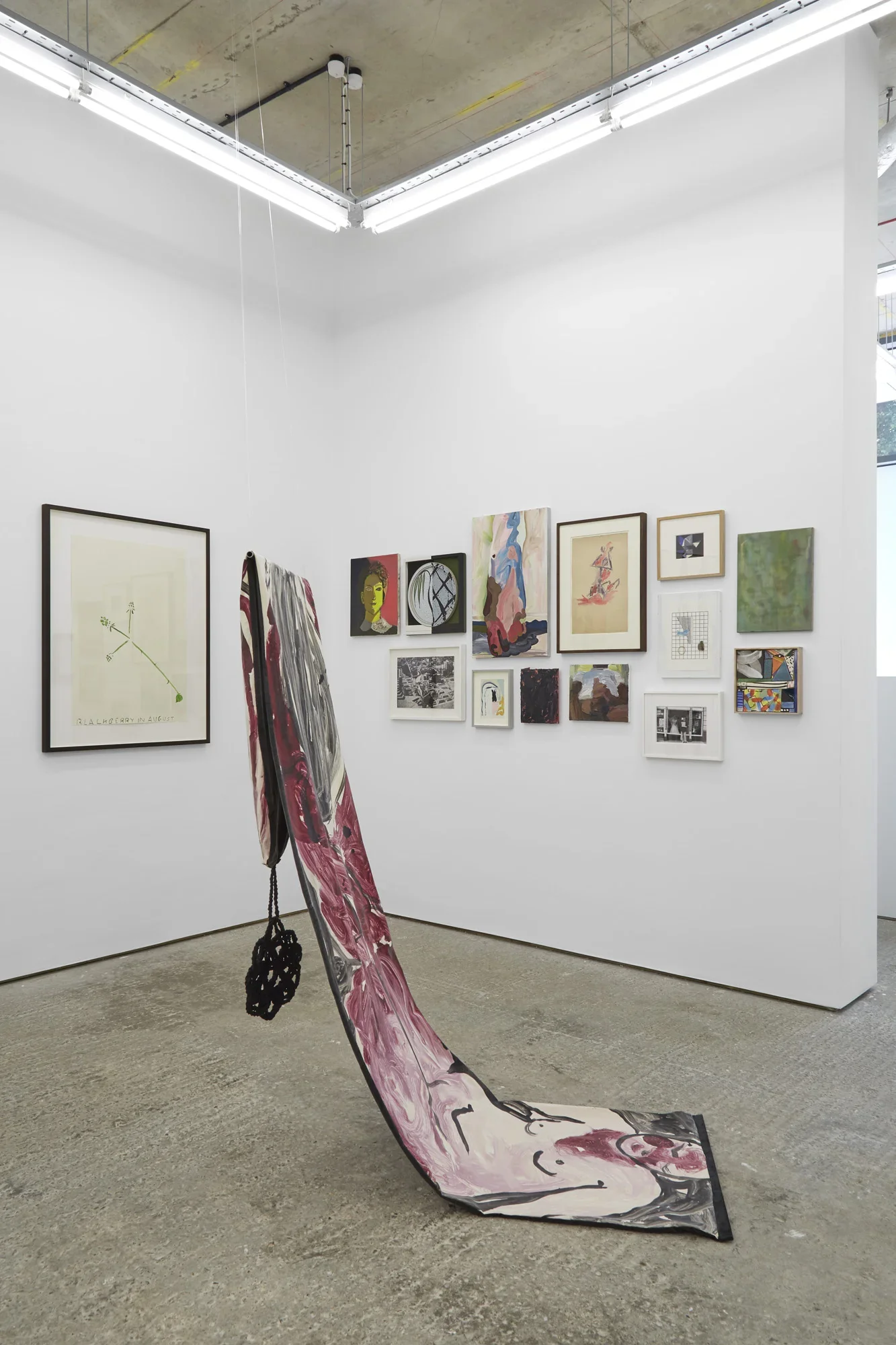
Image: Installation view of Aimee Parrott’s Pelt (2017) in 31 Women, Breese Little, London, 2017.

Because we are Cura Art, how do you care for your collection and ensure it will be preserved for future generations? Do you think about the legacy of your collection?
I am hoping to set up a trust or foundation for my collection to ensure that it stays together in the future. I have two children. Maybe one of them will want to run it after I leave this world.
My retirement project includes setting up a residency in upstate New York where I was born and raised and now spend every summer on Canandaigua Lake. As part of this project, I am hoping to find a space that could host both the residency as well as an exhibition space to show the collection. More details to follow…
Image: View from the front porch of Marcelle Joseph’s lake house, Naples, New York, USA, 2024.