
Founded with the principles of access and community, CURA Art utilizes a broad network and expertise to support collectors with all aspects of managing their passion and investment.
While many of the collectors we know and work with choose to remain private, several have generously allowed us to share their stories with you, to inspire others and encourage open discussion on the role of the collector in the 21st century.
The aim of the Collecting Stories series is to de-mystify the world of collecting, but also represent the many different approaches to acquiring and supporting the arts. Collecting is so much more than amassing beautiful or interesting works of art and objects; collectors can invest in the future and document the past and present – through this series we hope to bring this to light.
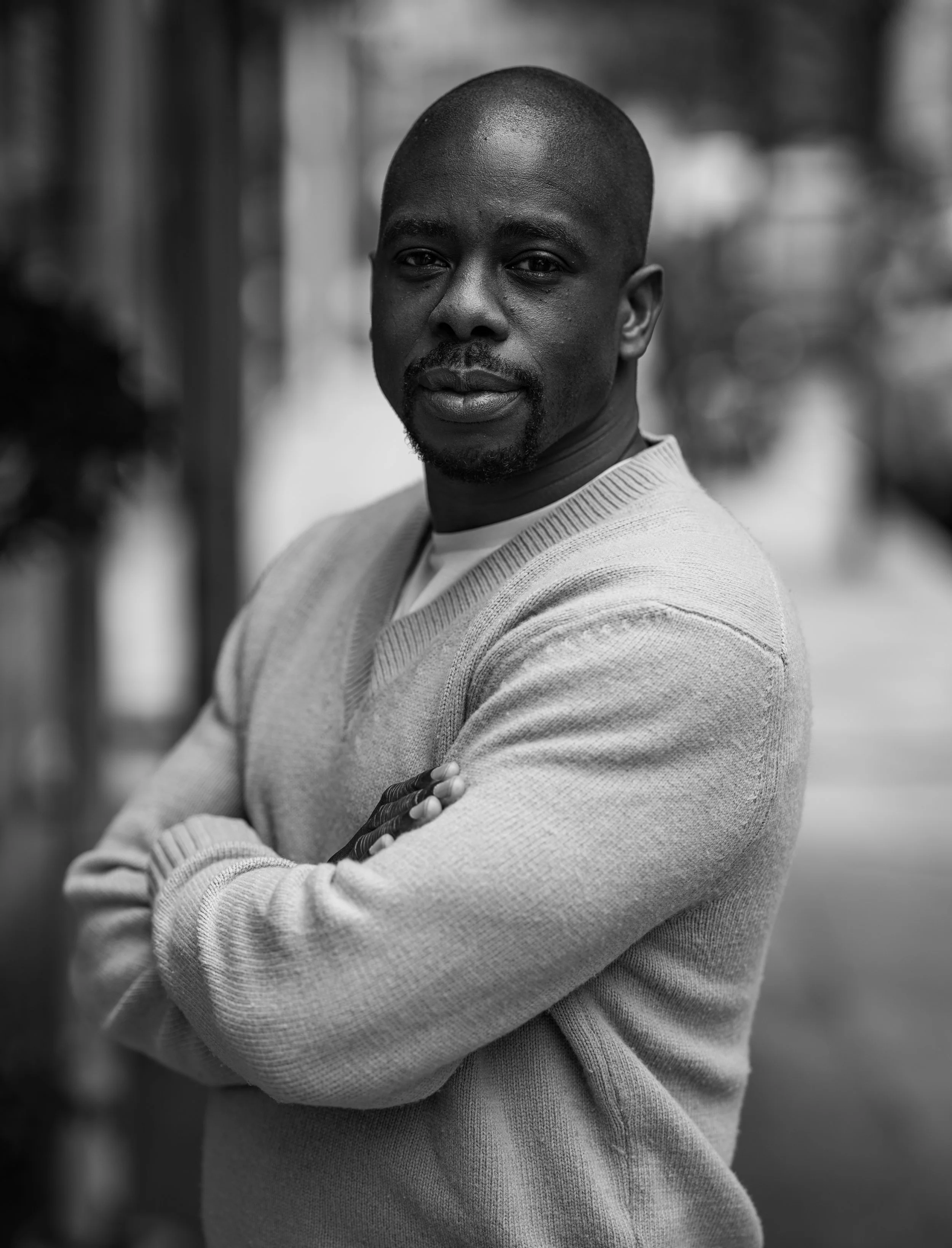
Aki Abiola is the founder and CEO of Hope93 Gallery, a London-based institution dedicated to elevating underrepresented artists across various disciplines.
Born in London to Nigerian parents, Aki Abiola's diverse background includes two decades of experience as a trusted advisor in the finance industry. A Cambridge graduate and former England youth rugby player, Aki has always had a deep passion for art. Over the years, he has become an avid art collector and has served on the Tate Museum’s acquisition committee, advising on the inclusion of underrepresented African artists. He is also a board member of Pallant House Gallery in Chichester, UK.
Established in 2024, Hope93 Gallery serves as a platform for creatives at any stage of their career, emphasizing inclusion and access within the art world.
Image Credit: Misan Harriman
The name "Hope93" pays homage to Aki's father, the late Chief MKO Abiola, who won the 1993 Nigerian presidential election, a victory that was annulled by the military regime. This event symbolizes a fight for justice and inclusion, values that Aki aims to uphold through the gallery. Hope93 Gallery is committed to providing a vital platform for creatives from diverse backgrounds, connecting them with collectors, communities, and support systems. Through its exhibitions and advisory services, the gallery strives to drive positive change in the art world by championing inclusion and access for all artists.
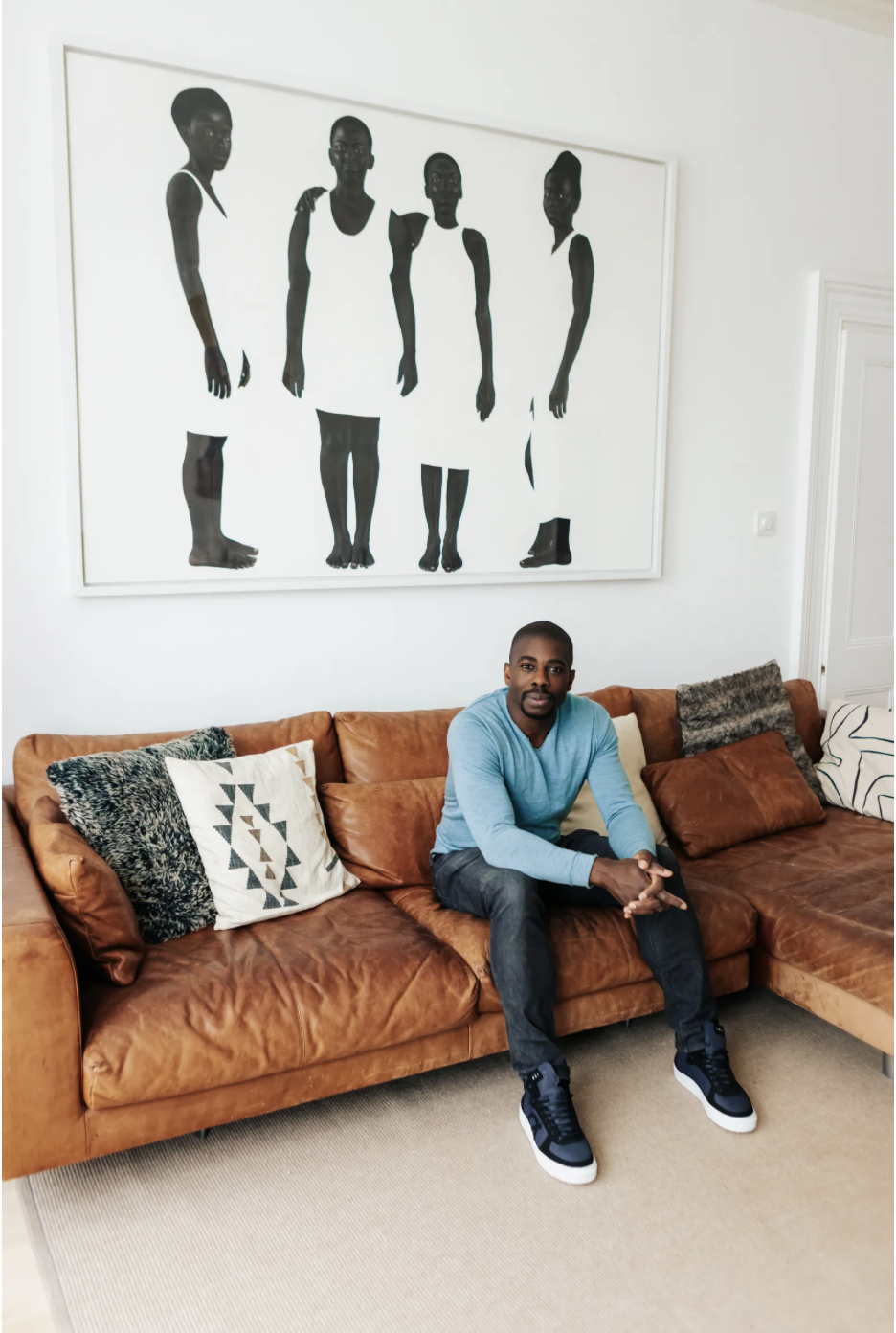
Tell us a little about your Collection, (what type of work do you collect, how many pieces, what medium, what types of artists, subject matter etc…). If you had to title it what would it be?
I think of my collection as an extension of who I am with all of the contradictions and feelings that make us human. The title would be something like “A Beautiful Monster.” It can really be pretty wide ranging. I typically collect work that makes me feel something, impacts me in a way that only art can. Medium wise, the majority is oil on canvas, although I started with prints as a more affordable entry point. But I can’t lie, I’ve stopped collecting prints, not because I’m a canvas snob that looks down on them, they get very addictive and wall space is an issue. The types of artists can be literally anyone; I have Sculpture work from Lorenzo Quinn to Damien Hirst- it doesn’t matter where an artist is from, but when I properly started to document my collection, the majority were minorities with a heavy slant to female artists. That happened without me realising it at the time.
When it comes to the type of artists, I will say that I’m drawn to living artists especially those at the start of their journey. If I can help them early, it allows for meaningful relationships to start. They become more than artists, they can often become friends.
How did your passion for Collecting start? Do you have a work that you can attribute to when you realised you were a Collector?
I think I became a collector after my first piece. When I couldn’t afford a piece of art and I bought it anyway, something had taken hold. I was infected by the collector virus. That’s when I knew art was going to get me in a lot of trouble. That first piece was by Banksy in 2007 for £750 having just left university still paying off student loans. Soon after, I moved to Hirst, a variety of more western artists before turning more attention to more underrepresented.
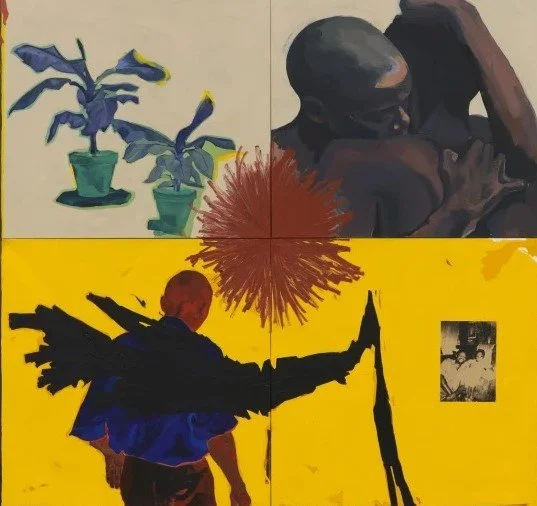
Image: .Kudzanai-Violet Hwami, A theory on Adam, 2020, Silk screen and oil on canvas, Courtesy Aki Abiola Collection
How do you decide what to add to your collection and with what criteria do you judge a work?
This process has evolved over the years. At the start it was purely a gut feeling, now the gut feeling is also layered with research, an attempt to understand the mentality of an artist, which is especially important in getting the personal meaning to the work. Do I see the artist showing in an institution one day or at a major gallery? Does it matter to the artist if I buy the work or not? I do my best to avoid the hype, collecting with with ears instead of eyes should be avoided at all costs.
All of those do come into play. However, sometimes I just go with what I went with first… gut feel and instinct.
A lot of the artists in your collection are ‘under-appreciated’ either because of their age, gender, race or nationality, why are you attracted to these works in particular?
I do love an underdog story, a lot! I’m not the only one that has ever felt under-appreciated, or had hard times. People have gone out of their way to give me an opportunity. It makes sense to keep an eye out for others and do the same where possible.
The cold reality of life is that prejudice exists so I do my best to take extra time to listen and look where others might not. Talent HAS to be the driving force, but there is so much talent that gets overlooked by some of the biggest collections and institutions in the world. And when you look at the difference in pricing with some artists vs others, it makes no sense to me. So affordability comes into play but also a sense of equality. I’m also competitive and like the “I told you so” conversation when those artists eventually do get recognised. I take a lot of pride in researching artists, showing them to both new and experienced collectors and when they fall in love with the work it’s magical.
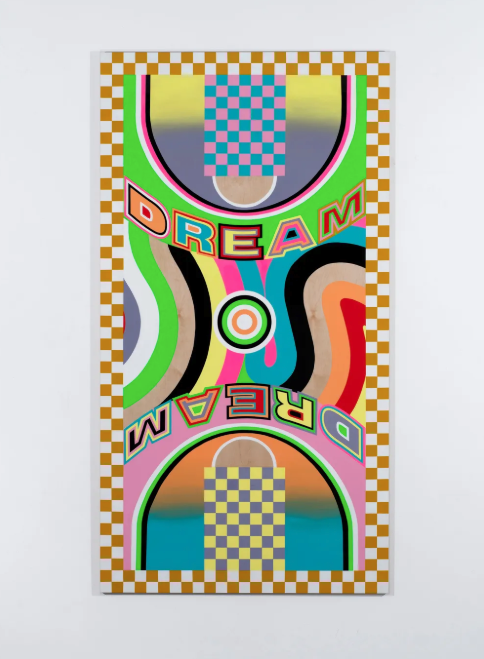
Image: Lakwena Maciver, Hakeem Olajuwon, 2021, Acrylic and polyurethane on plywood, 213 x 113 cm. Courtesy Aki Abiola Collection
You are somewhat unusual in your collecting approach because you became a collector and then decided to embark as a gallerist, why did you feel the need to start Hope 93?
Simply: Art can be so powerful and should be for everyone. But art can feel so intimidating to so many people. I wanted to open things up, I wanted people that felt excluded to feel included and get the same enjoyment that I get. It upsets me that some of the best artists don’t get the platform they deserve. That’s the foundation of Hope93. Don’t get me wrong, not everyone can afford “fine art,” we all have different priorities and financial pressures, but we should all be able to feel welcome and enjoy art. I feeling that I get when people support artists after discovering them at Hope93 is really hard to replicate. We get as many first time collectors as experienced ones. Thats progress to me.
Are there any historic or contemporary collections/collectors you admire that act as an inspiration to you?
I get pretty jealous of those collections that don’t really have any budget, and I try to collect without listening to too many influences because art is so personal for me. However, I’m a huge fan of the collections of Josef Vascovitz and Lana/Harry David. I love their eye and knowing them personally helps contextualise their collection. I like Josef’s in particular because of the support he has given to so many young artists.
What do you think makes a responsible collector? And what advice do you have for fellow collectors?
Collect with purpose, especially with an emphasis on supporting artists. Shout their name in rooms that you are in, it can make a huge difference. On that note, thanks to all the younger artists that are in my collection. Artists like Emeh Omeh, Shaqúelle Whyte, Kudzanai-Violet Hwami , Luke Agada, Sophia Loeb, Brian De Jesus, Emma Prempeh, Basil Kincaid, Okiki Akinfe, Esiri Erheriene-Essi, Tunji Adeniyi-Jones and many others. Keep shining.
Helping with institutions - lending works to institutions plays a very important role in the collecting journey. Sometimes the art you own isn’t always your own! As for advice for fellow collectors, there is no doubt in my mind that artists are having a tough time at the moment with galleries and artists selling less than they used to, continuing to support artists in the rough times if you have the means is crucially important, so more a gentle reminder rather than advice. Collecting when others slow down can impact artists immeasurably.
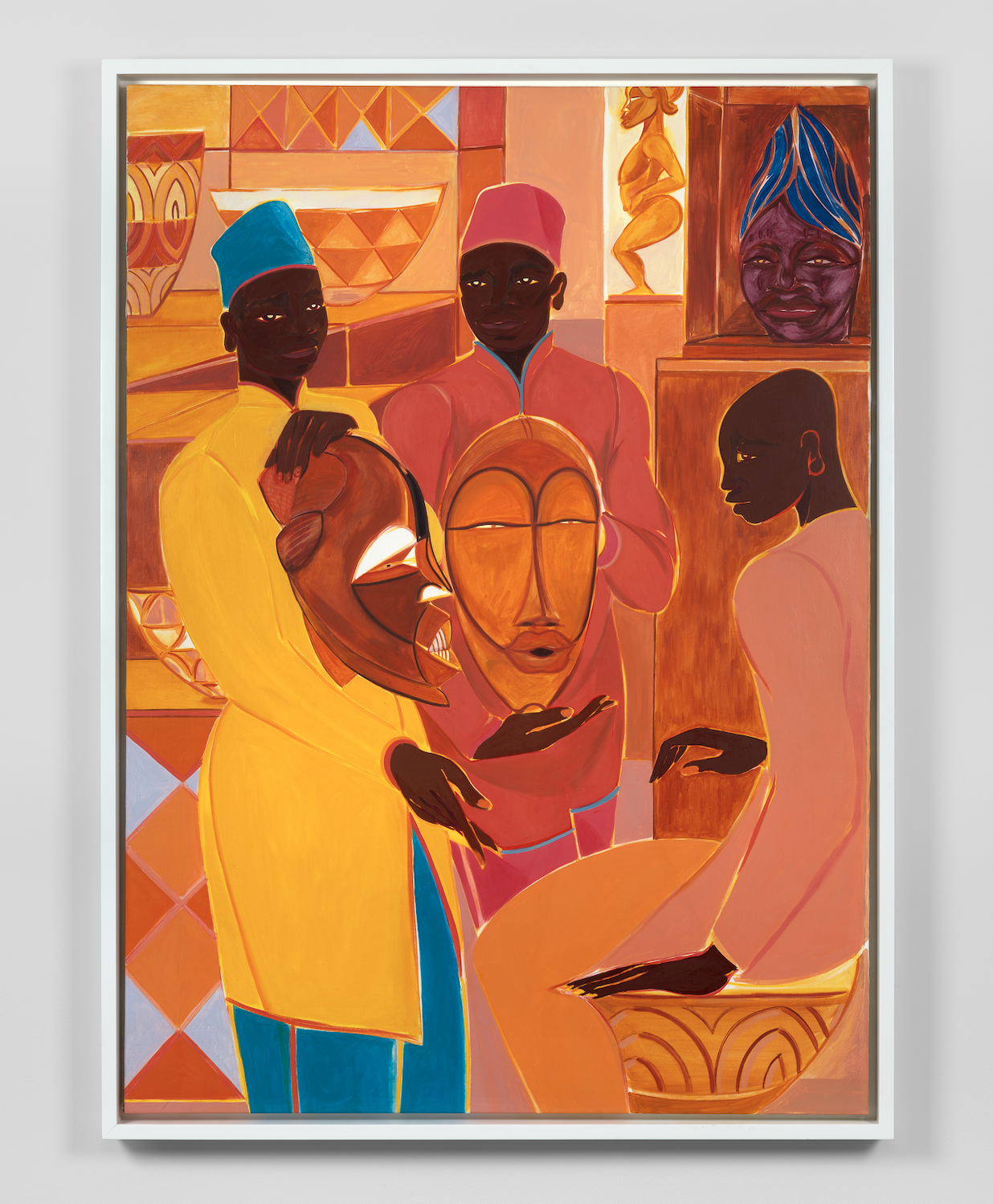
Image: Tunji Adeniyi-Jones , Greeting Gifts, 2020, oil on canvas,183 x 132 cm. Courtesy Aki Abiola Collection
If you could buy any artwork irrespective of cost or time, what would it be?
My heart says - The Tate museum owns this incredible piece by one of my favourite artists. Reborn Sounds of Childhood Dreams by the Sudanese artist Ibrahim El-Salahi would be my pick. To me he’s one of the most underrated artists on the planet and there is something otherworldly about his work. The Tate wouldn’t ever let it go though, it’s priceless and rightly so.
My head says - The Mona Lisa. I would curate shows around her at my gallery Hope93 with brilliant portrait artists like Kelvin Okafor, Emily Gillbanks, Wangari Mathenge, Fa Razavi, Ramone ‘K’ Anderson (the latter who uses spray paint) and others just to put a modern twist on such an iconic painting. I like new audiences colliding with the older generation and expressing opinions and thoughts about painters centuries apart.
What do you envision for the future of your Collection?
I don’t really think that far ahead, I just want to enjoy it, continue to see my children enjoy and interact with art and hope, it acts as a reminder to others to collect art that stirs emotions. I’d also love it to be a reminder about supporting artists early, which enables you to build a meaningful collection (relatively) affordably.