
Collecting Stories: A Day in the Life of a Custodian and Curator - Huma Kabakci
Founded with the principles of access and community, CURA Art utilizes a broad network and expertise to support collectors with all aspects of managing their passion and investment. While many of the collectors we know and work with choose to remain private, several have generously allowed us to share their stories with you, to inspire others and encourage open discussion on the role of the collector in the 21st century.
The aim of the Collecting Stories series is to de-mystify the world of collecting, but also represent the many different approaches to acquiring and supporting the arts. Collecting is so much more than amassing beautiful or interesting works of art and objects; collectors can invest in the future and document the past and present – through this series we hope to bring this to light.
Huma Kabakci approaches curating and custodianship less as a process of organising objects and more as a form of care, hosting, and stewardship. She moves through the art world in a way that has long inspired us; challenging the status quo, intriguing audiences with new ideas, but most importantly, questioning the notion that you are simply one thing.
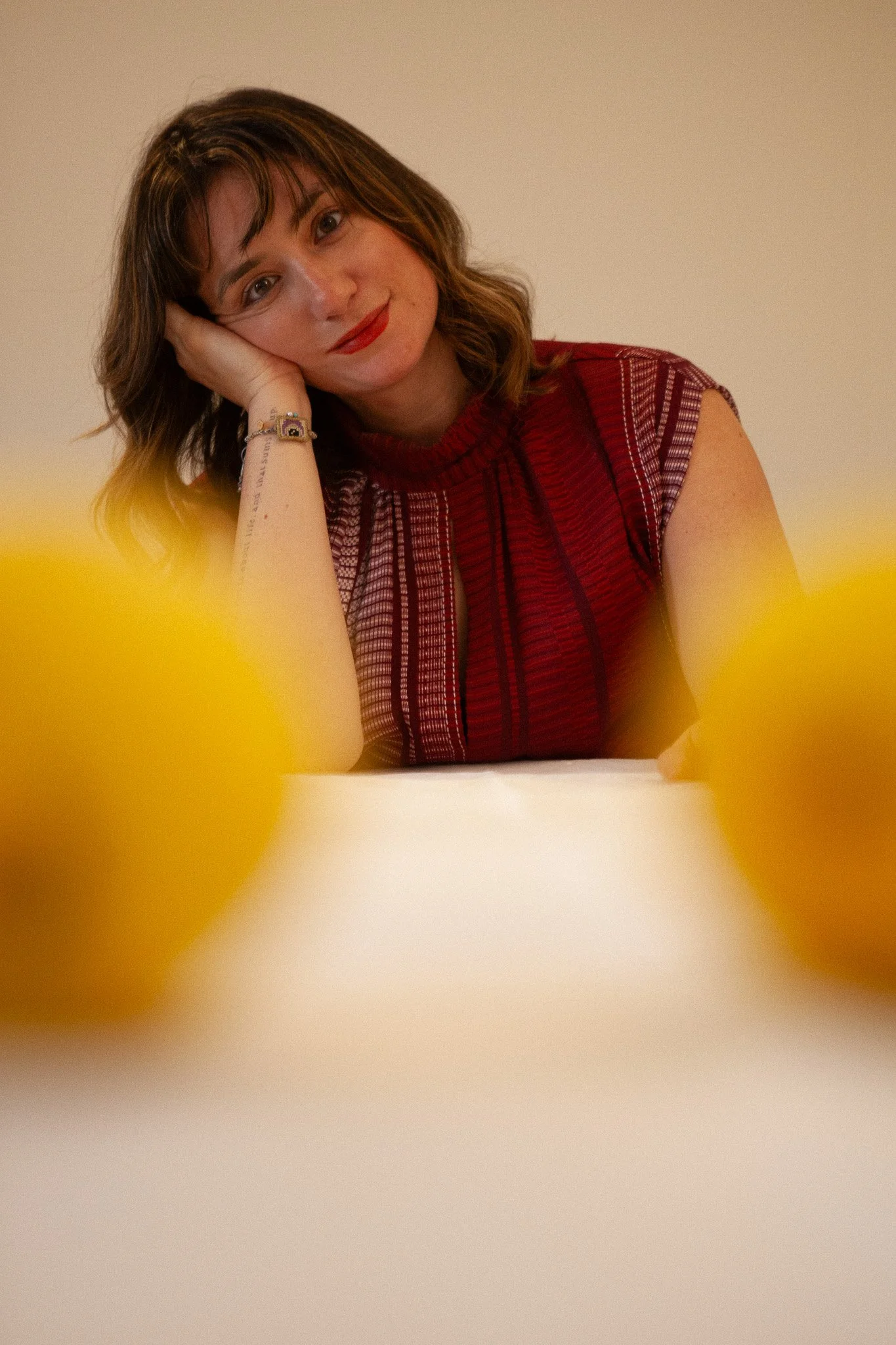
As custodian of the NHK Collection, the intergenerational collection founded by her late father, Nahit Kabakci, her practice is shaped by the responsibilities of living with artworks over time: not simply preserving them but continually creating new conversations around them. Across exhibitions, shared meals, sonic experiences, and intimate gatherings, Kabakci has developed a distinctly relational approach to contemporary art, one rooted in atmosphere, emotional intelligence, and the subtle dynamics of how people come together. Whether through Freudian Bites, her ongoing series exploring food and conversation with a hint of psychoanalysis, or through immersive sound baths centred on collective listening and presence, she treats curating not as something fixed within institutions, but as something embodied, social, and lived within everyday experience.
Recently completing a part-time MA in food anthropology, Kabakci has sharpened an already instinctive interest in ritual, behaviour, hospitality, memory, and collective experience, concerns that increasingly shape both her independent projects and her institutional work, including an upcoming exhibition at the Sainsbury Centre. In this conversation, we follow the rhythms of her daily life to explore how custodianship informs her curatorial practice, what it means to inherit and evolve a collection across generations, and why she is drawn to forms of gathering that encourage slowness, attention, and participation. Moving between archive and dinner table, private ritual and public exhibition-making, Kabakci reflects on the emotional labour of maintaining a living collection, the relationship between care and curation, and the possibility that contemporary art spaces might function less as sites of display than as spaces for connection.
Image of Huma: Emma Witter, courtesy of the artist
What does a normal morning look like for you before the “curator/custodian” part of the day begins?
A 'normal' morning for a freelancer with a miniature dachshund looks like this: I wake at 6:30 am and drink two or three glasses of water to hydrate. Then 15 minutes of unguided meditation, followed by breathwork and journaling. After that I wake Pixel for his walk, then climb back into bed with him and drink my V60 filtered coffee, listening to a good playlist to wake myself up if I haven't already and plan the day ahead.
What’s the first thing you pay attention to in the morning: silence, sound, your phone, food, people, the news?
When I wake up, I first pay attention to my surroundings: are there birds chirping outside my window, is there something happening around me? I try to avoid my iPhone and the news for the first hour, except to use it as an alarm for my unguided meditation and as a playlist.
You work across exhibitions, collections, dinners, writing, sound, and research - do these feel like separate practices to you, or part of one continuous way of living?
I think they are all interlinked somehow, and definitely a continuous way of living. I wouldn't separate them. I guess they are all multi-sensory, and we are invited to use all of our senses (if and when we can) whilst experiencing life
Your projects often feel deeply sensory. Are you someone who experiences the world primarily through atmosphere?
Definitely. I'm diagnosed with subclinical ADHD, so I think there's a definite influence there too, haha. My mind is always whizzing along at 100 miles per hour, and I guess that's why I do all the things I do: meditation, sound, acupuncture, and so on, to keep a work-life balance. Otherwise I over-exhaust myself and can easily push into burnout.
You recently completed further studies in anthropology. What did anthropology give language to that curating alone couldn’t?
I recently submitted my dissertation for my part-time (two years) MA programme in Anthropology of Food at SOAS and hope to get my results by early November 2026. I think the taught academic anthropological language really expanded my way of observing things and people around me. If I need to bridge the connection between anthropology and curating, I guess it would be the fact that they both have a similar process. Ethnographic fieldwork begins in immersion rather than with a fixed argument, and this is exactly how a curator works when spending time in an artist's studio, exploring their material and practice and critiquing as they go. They are also both relational in a way. The conversations I had with my participants in my ethnographic research for my dissertation behaved much like studio visits, running on rapport and on the discipline of taking someone else's understanding of their own life seriously. In both, I realised I was never a neutral observer; I needed to take a position and choose how to frame the ethical and representational consequences.
Image: Emma Witter, courtesy of the artist
We are interested in how often your work focuses on gathering: shared meals, collective listening, conversation, hospitality. Did anthropology sharpen your awareness of those structures and social rituals?
I think these social rituals were always embedded in my upbringing and cultural heritage. Growing up in a Turkish family with lots of cousins and sociable parents who gathered friends, colleagues, and artists around the dinner table, so much of my experience was shaped by sharing meals, listening, and collectivity. But yes, anthropology has definitely heightened my awareness of those structures, dynamics, and rituals around conviviality.
Your work seems interested in what people do with their bodies around art - eating, listening, sitting, speaking, grieving. Was that always instinctive for you?
I think it was instinctive before I had any language for it. Some of my earliest memories at the Royal College of Art are of cooking for my fellow students, not as a project exactly, just as a way of gathering people and seeing what happened when we sat and ate together. That instinct carried into my work when I was running Open Space Contemporary, my itinerant art platform, between 2017 and 2022. Because it had no fixed home, I was always thinking about how people would move through a space, where they'd sit, what they'd eat, how they'd talk to one another around the work. The body was never separate from the art for me. Eating, listening, sitting, grieving, these were always part of how people encounter each other and encounter what's in front of them. So yes, it was instinctive, and the more formal parts of my practice have really been a way of understanding and deepening something I was already doing.
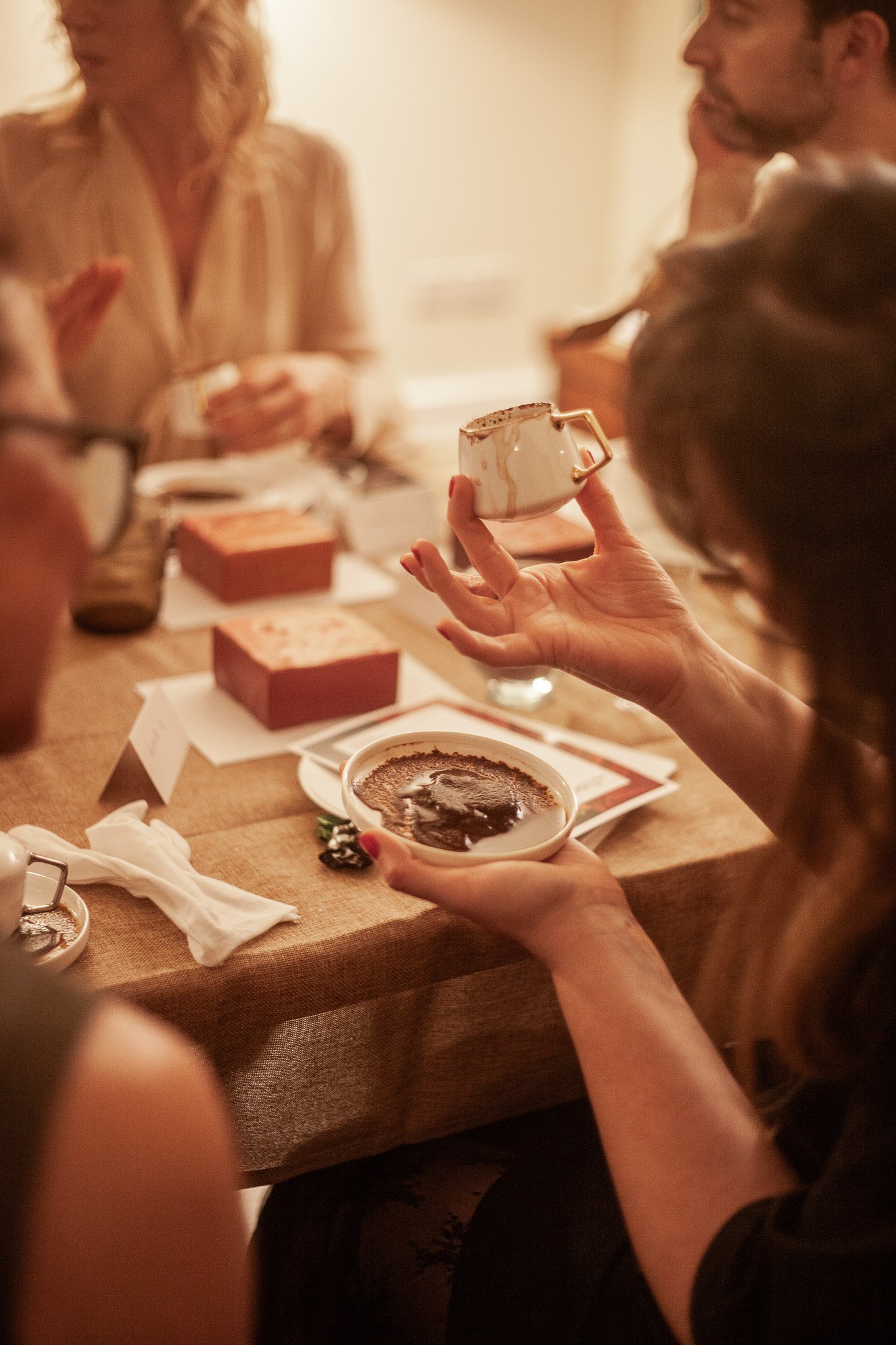
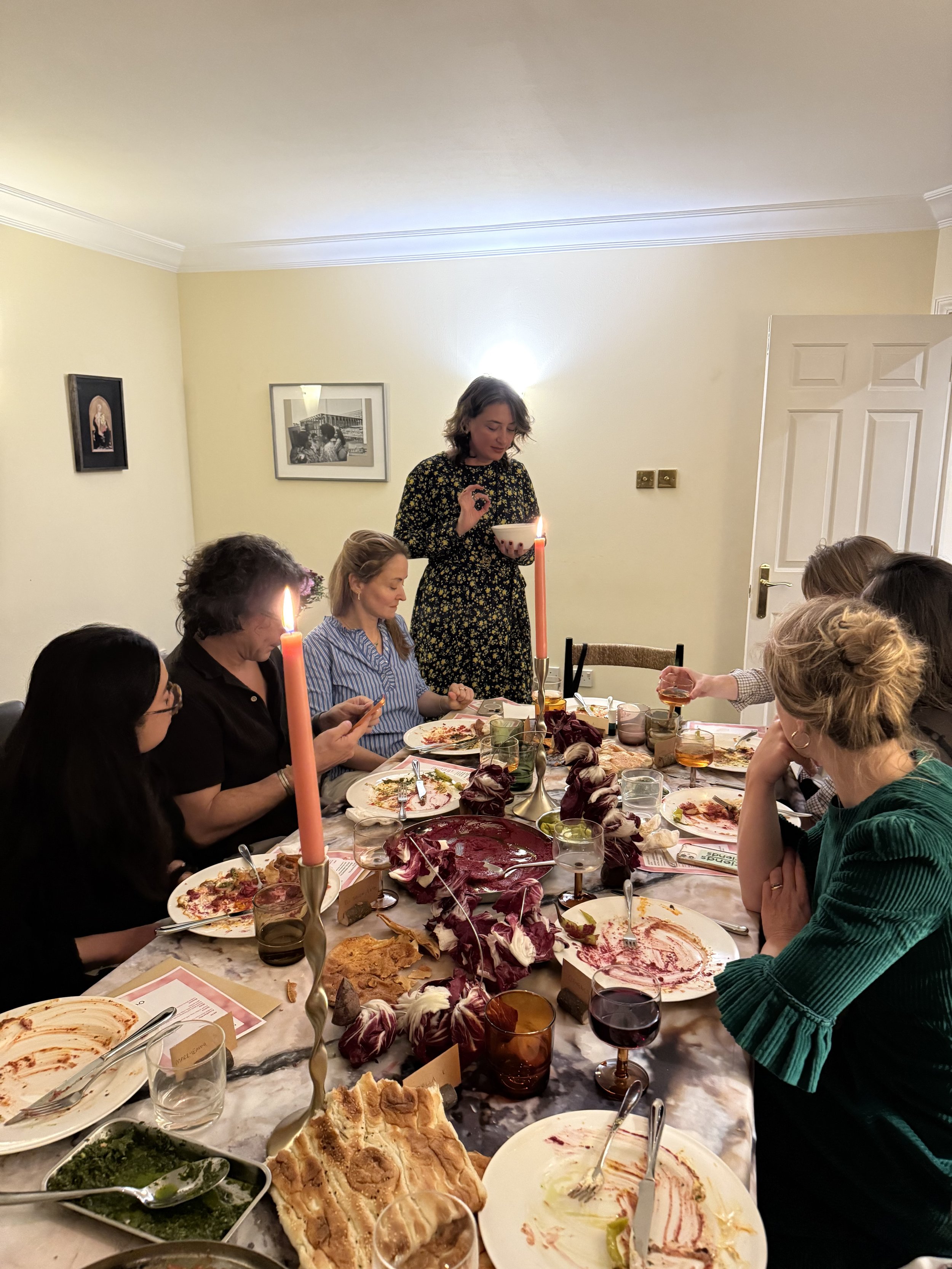
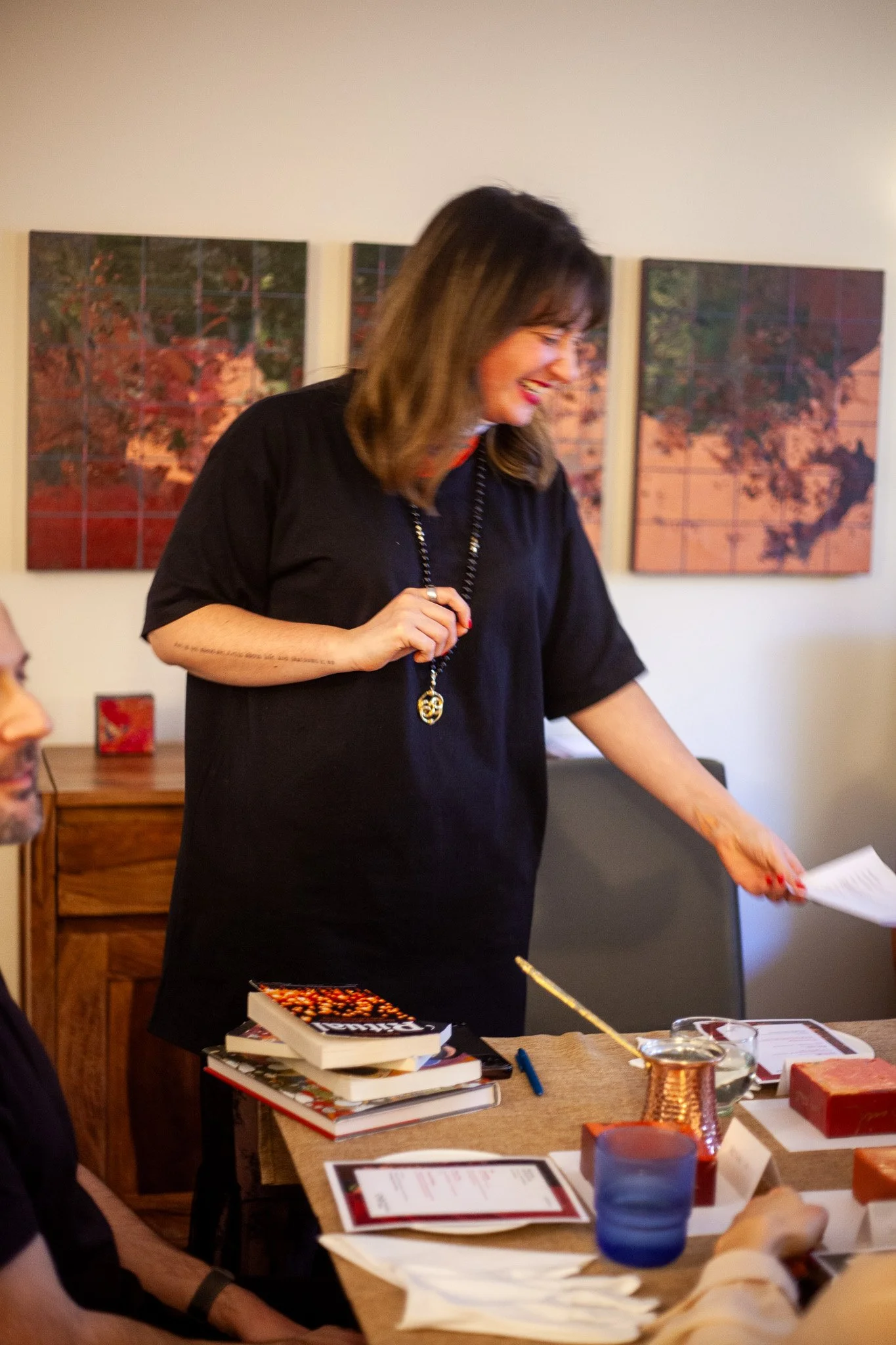
Image of Huma’s ‘Freudian Bites’ series: courtesy of Joanna Wierzbicka
Your work seems interested in what people do with their bodies around art - eating, listening, sitting, speaking, grieving. Was that always instinctive for you?
I think it was instinctive before I had any language for it. Some of my earliest memories at the Royal College of Art are of cooking for my fellow students, not as a project exactly, just as a way of gathering people and seeing what happened when we sat and ate together. That instinct carried into my work when I was running Open Space Contemporary, my itinerant art platform, between 2017 and 2022. Because it had no fixed home, I was always thinking about how people would move through a space, where they'd sit, what they'd eat, how they'd talk to one another around the work. The body was never separate from the art for me. Eating, listening, sitting, grieving, these were always part of how people encounter each other and encounter what's in front of them. So yes, it was instinctive, and the more formal parts of my practice have really been a way of understanding and deepening something I was already doing.
You describe yourself as a custodian of the NHK Collection rather than simply a collector. Why is that distinction important to you?
I think the main distinction is that I never started the collection, and that credit should go to my late father, Nahit Kabakci. The second distinction is that, as a second generation, I've found it pivotal not only to take care of and preserve my father's legacy, vision, and work, but also to bring my own curatorial vision to what he already built.
What does caring for a collection actually look like on a daily basis, beyond the glamorous perception of collecting?
Far less glamorous than people imagine. Day to day, it's temperature and humidity control, security, and making sure works are stored properly. It's cataloguing and keeping records up to date, managing loans and the logistics that come with them, and staying on top of insurance. Most of the work is quiet, practical custodianship, the unseen part that keeps everything else possible.
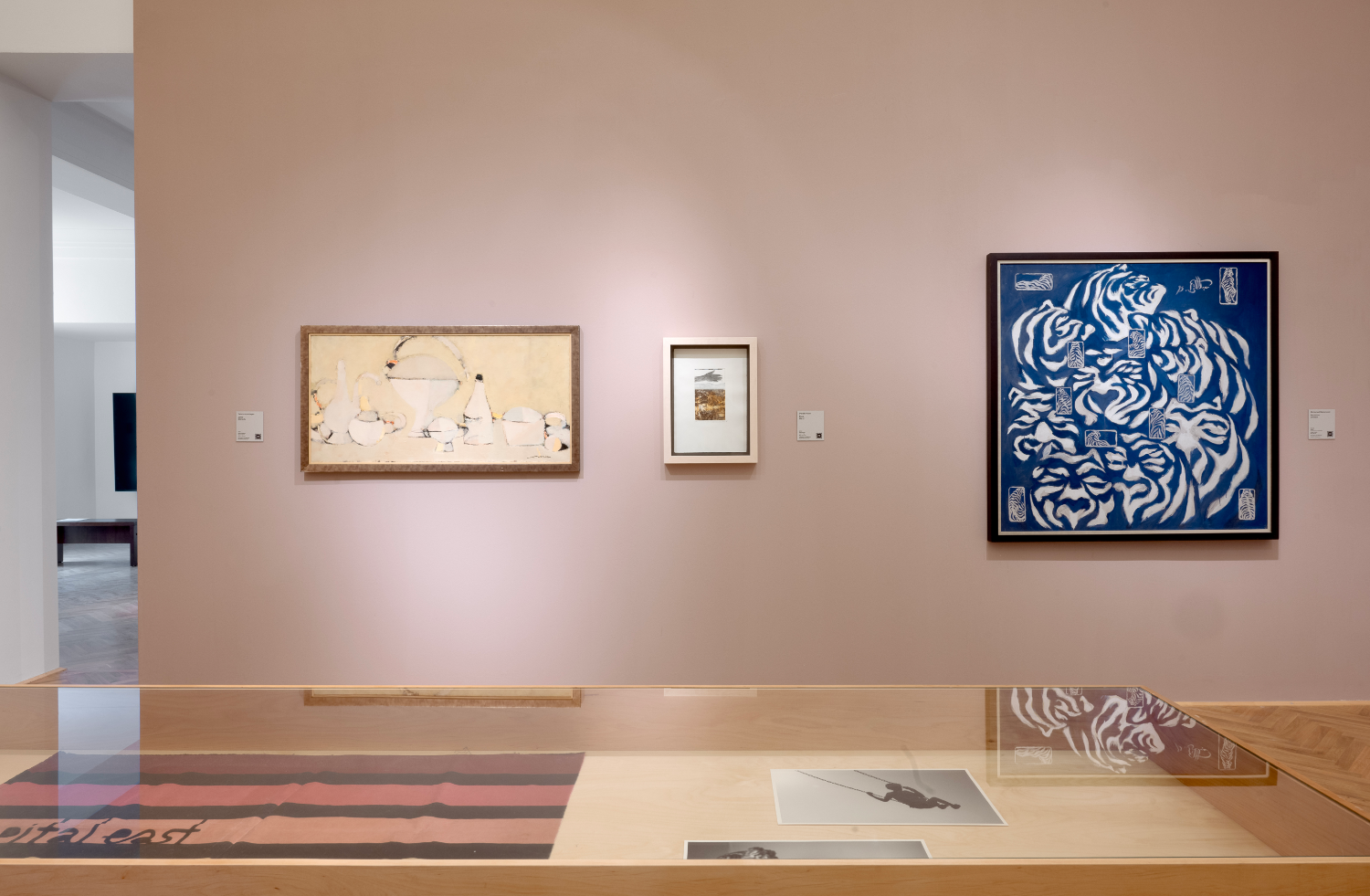
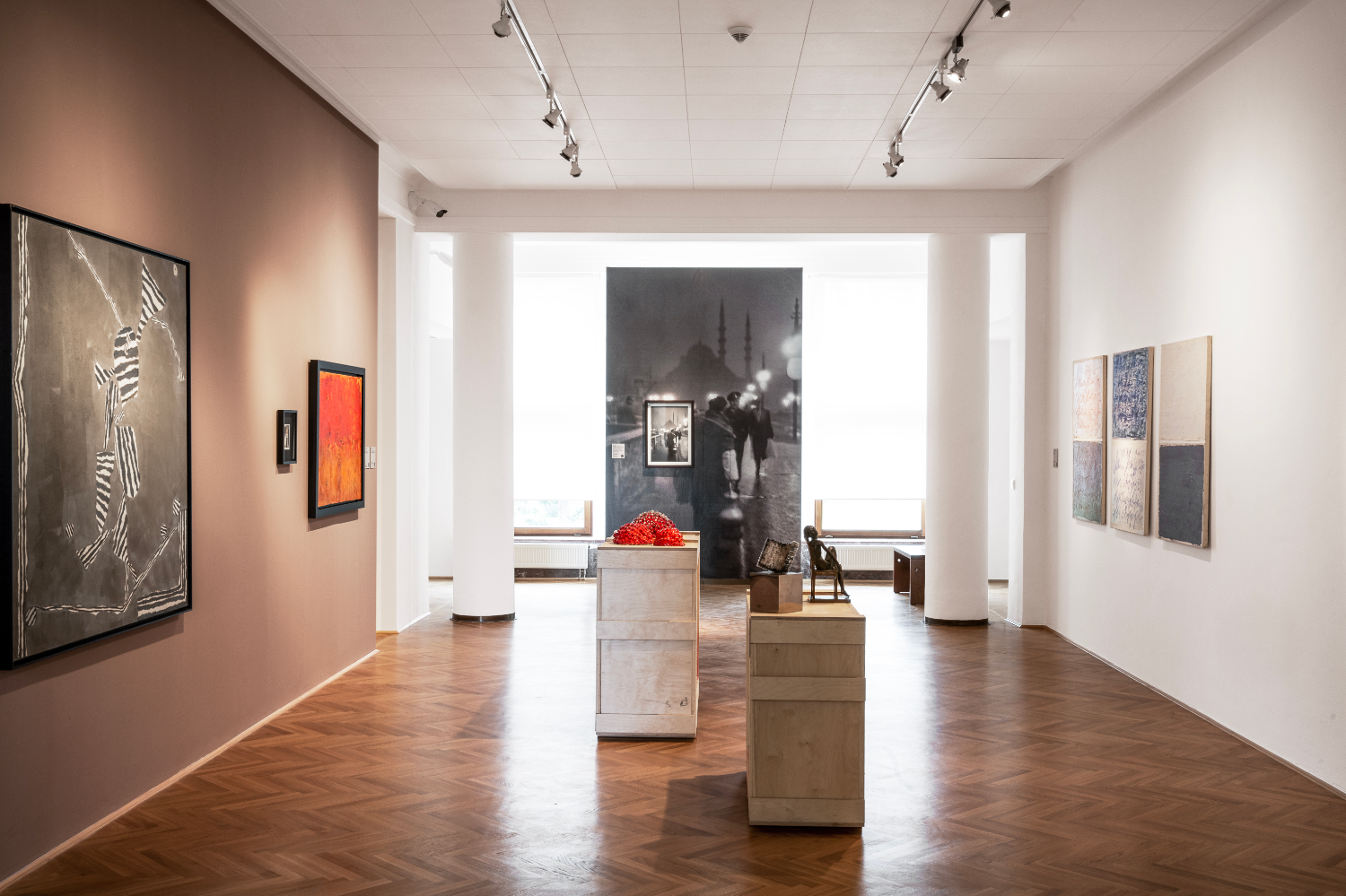
Image: Installation view of the “NHK Collection for Lidice” exhibition at the Lidice Art Collection – Lidice Memorial, 10 June 2026 – 7 March 2027, Lidice gallery, Czech Republic. Photograph: Lukáš Havlena. Courtesy of Lidice Art Collection
The NHK Collection carries your father’s legacy but also your own curatorial imprint. How do you negotiate dialogue across generations?
It’s a delicate balance. On one hand, I stay professional and try to see the collection's trajectory clearly, in its geographical and socio-political context, where it sits and what it can say now. On the other, that reading is always threaded through memory: honouring my father's vision and the time I spent with him. The dialogue across generations happens in holding both at once, the analytical and the personal, without letting either cancel the other out. His vision is the foundation, and my imprint is a continuation of it rather than a departure.
When you live with artworks for years, do they stop being objects and become
companions?
Honestly, yes, they do. There's a Freudian pull I can't deny, the way he surrounded himself with his antiquities and invested them with so much feeling, treating objects almost as presences. I recognise that in myself, and in my late father's sentimental approach to the collection. But I also try to live close to Zen philosophy and non-attachment, and that's exactly where it gets difficult. To care for something deeply while holding it lightly, to let it become a companion without clinging to it as mine, is a contradiction I sit with every day. I don't think I've resolved it. Maybe the work is in not resolving it, in letting the attachment and the letting-go exist side by side.
Image of Huma: Emma Witter, courtesy of the artist
What kinds of conversations exist between works in the collection that perhaps wouldn’t exist in a museum context?
Museums have to keep things in order. Works are selected by region, period, or medium, and there is always pressure to stay art-historically neutral, to have the wall text line up with the provenance. They are always looking to find the missing piece or pieces in the gap.
The NHK collection doesn’t really work like that, because it's intergenerational. My father started it and I carried it on, and we were looking at very different things. He was able to travel to Azerbaijan and neighbouring countries and collect from there in the 1990s. I was involved much later, interested in the body, in gender, in how diaspora sits inside an object. My studies at Royal College of Art and curatorial experience in London also shaped the collection and its trajectory. So when an artwork of his ends up near a work that I acquired, it might not be an obvious pairing, something more personal. The other thing is that I live with a lot of it. In my flat in London there is a Holly Stevenson ceramic near a Kader Attia collage, small things I pick up and move around. You end up in a far more everyday relationship with the work than a gallery allows. And privately I don't have to resolve the contradictions. The thread running through the collection is unfinished, and I have made my peace with leaving it that way.
Has your idea of stewardship changed as you’ve gotten older?
Yes, quite a lot. When I first took on the collection, I thought of stewardship mostly as preservation, protecting what my father had built and keeping it intact. I also kept on trying to overthink “what my dad would have done?”. Over time, I've come to see it as something more active and generous. Stewardship now means circulation as much as conservation: lending, gifting, championing artists, letting works be seen and put into dialogue rather than held in place. There is also a lot of social responsibility attached to it. I've also become less possessive about it. The collection isn't mine to own so much as mine to carry for a while and eventually pass on, and that shift has made the responsibility feel lighter and clearer.
Image: Image: Installation view of the “NHK Collection for Lidice” exhibition at the Lidice Art Collection – Lidice Memorial, 10 June 2026 – 7 March 2027, Lidice gallery, Czech Republic. Photograph: Lukáš Havlena. Courtesy of Lidice Art Collection
Is there one work in the collection you return to repeatedly during periods of uncertainty?
For some reason I think of Fahrelnissa Zeid’s painting we have with chicken bones. It has so many marks, energy and tactility that I cannot help myself go back to that work again and again.
You’ve spoken about cross-cultural dialogue as central to the collection. What kinds of conversations feel most urgent to sustain right now?
The collection is rooted in art from Turkic-speaking countries, Central Asia, the post-Soviet world, and the Balkans, regions that are too often read through a single geopolitical lens or overlooked entirely. What feels urgent is sustaining conversations that let these artists speak on their own terms. Beyond that, I think the most vital dialogues right now are the ones that cross the lines we're constantly told are fixed, between East and West, centre and periphery, the personal and the political. Art can hold those tensions in a way that public discourse rarely allows, and protecting that space feels more necessary than ever.
You’re currently curating a show for the Sainsbury Centre. What
conversations or questions are guiding the exhibition?
I'm curating Ecstasy and the Aftermath with Vanessa Tothill for the Sainsbury Centre's 'How Do We Find Love?' season. The exhibition asks how we move through love in all its stages, and unfolds across three chambers: the erotic and its risks, kinship and chosen families, and the slow renewal that follows loss. Rather than making declarations about love, we wanted to pose open questions and let visitors reflect through their own experience. That approach has made the process genuinely cathartic. The show has evolved into something more tender and more honest than I first imagined. It brings together artists including Ghada Amer, Anna Perach, Jonathan Baldock, Ingrid Berthon-Moine, and Francis Bacon from the Sainsbury Centre's own collection, alongside loans from the Women's Art Collection at Murray Edwards. The guiding question, really, is how we keep finding love, and each other, after everything love asks of us.
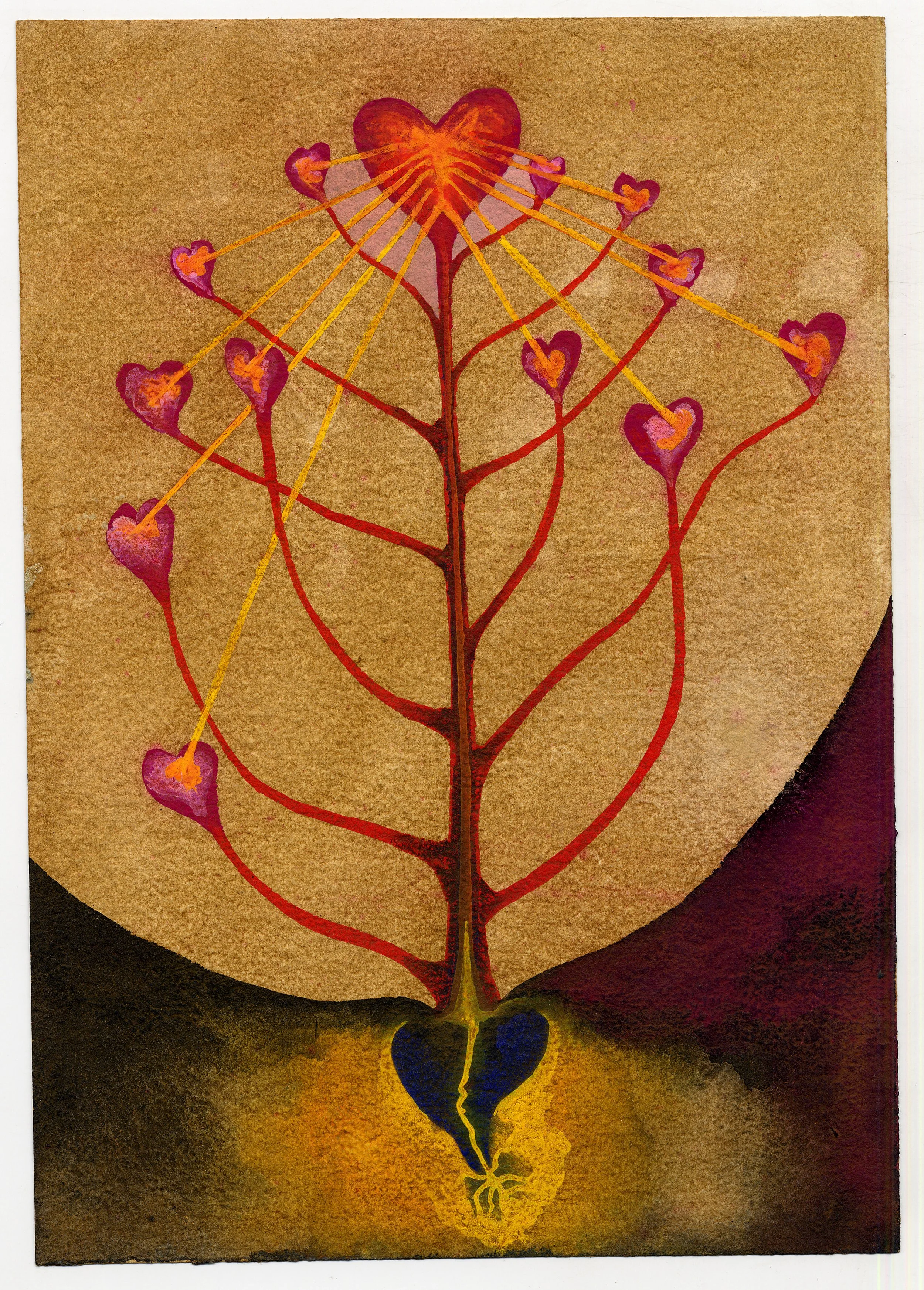
Image: Ithell Colquhoun, The Tree of Veins, 1940-41.
Copyright of the artist. Courtesy: Tate
What interests you most about curating within an institutional context right now?
What interests me most is whether institutions can become genuinely healing spaces rather than places that display objects behind glass. I've always believed art does something to us, in the body as much as the mind. Working on Ecstasy and the Aftermath at the Sainsbury Centre has shown me how a museum can invite people to reflect on love, loss, and renewal, and leave having felt something shift. Closely tied to that is relevance. Institutions carry real authority, and there's a responsibility to stay in conversation with how people actually live now, rather than retreating into the canon.
Then there's the multi-sensory dimension, where much of my energy goes. So much of how we encounter art is still governed by looking and keeping our distance. I'm interested in bringing in taste, sound, touch, and conviviality, so people meet the work and each other more fully, and are changed a little by it.
Does custodianship make you approach exhibitions differently from curators who encounter works more temporarily?
Yes. Living with a collection over time means I know the works as relationships rather than material to be arranged, so I approach every exhibition asking what a work needs and carries rather than only what it can illustrate on a surface level.
Your projects often feel emotionally and atmospherically driven. How important is atmosphere in your exhibition-making process?
Yes, definitely. I think of an exhibition as an environment that people move through with their whole bodies, so light, sound, scent and pacing matter as much as the works themselves in shaping what someone feels and remembers.
How do you balance research and scholarship with intuition when curating?
Rigorous research gives me the ground to trust my intuition rather than override it. The scholarship happens first and thoroughly, and then I allow myself to make associative, sensory decisions that the research has earned.
Has your recent anthropology research influenced the way you think about audiences and exhibition spaces?
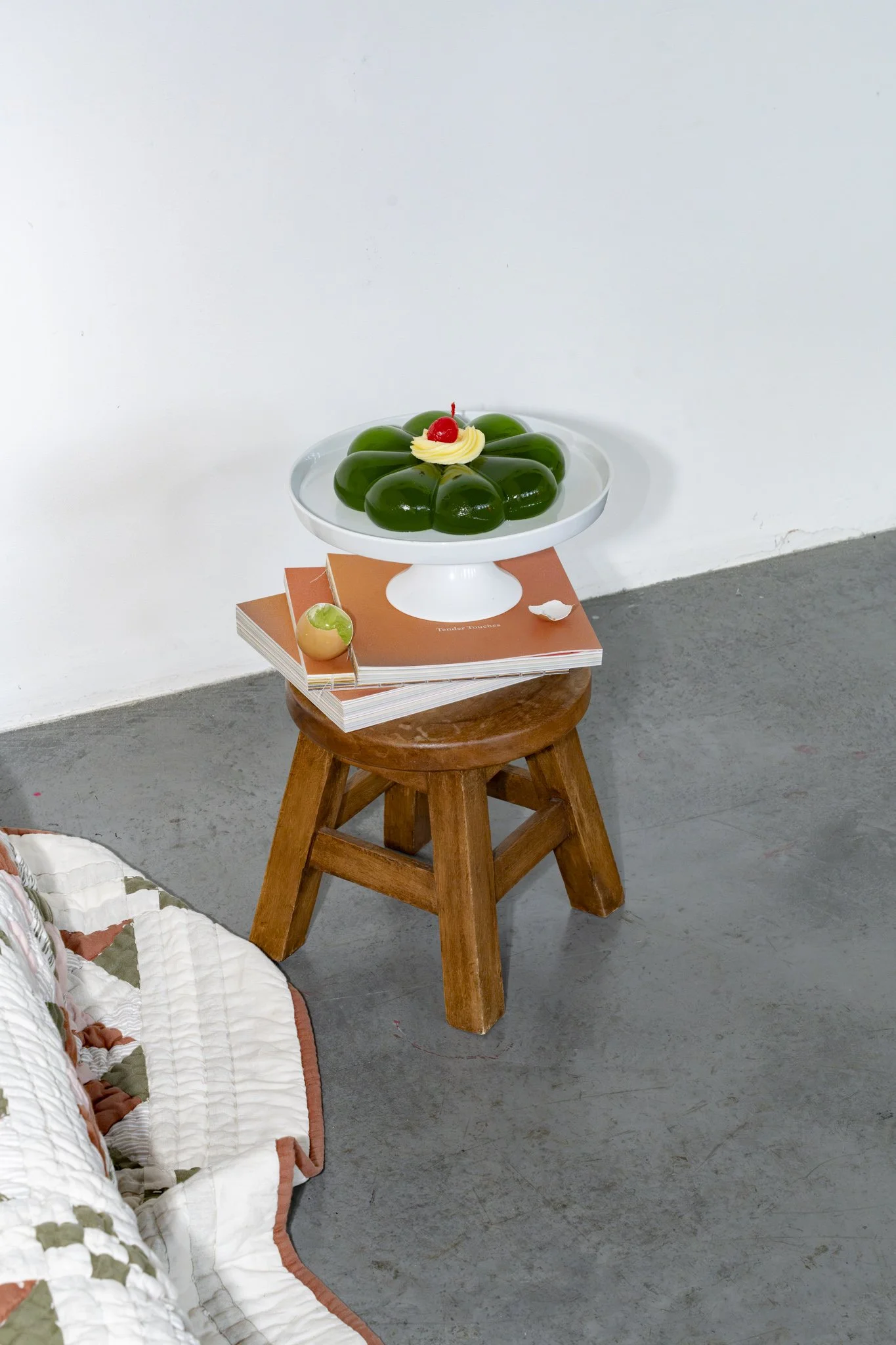
Deeply. Studying food and the rituals of the table has made me think of audiences less as viewers and more as guests, and of exhibition spaces as sites of gathering, hospitality and shared experience rather than passive display. I think I demonstrated this in our last presentation as a part of the Food Art Fair with artist Mia Wilkinson and jello artist/pastry chef Kiki from Murder Cake.
What can sound access emotionally that visual art sometimes cannot?
Sound bypasses the analytical mind and reaches the body directly, moving through us as vibration before we have named or interpreted anything. It can hold people in a shared present moment and open a feeling that images, which invite us to look and decode, sometimes keep at a distance. Also with soundscapes you can really create a presence, a feeling that visual art sometimes lacks to create immediately.
Image: Breakfast in bed... (and other bad habits) with Mia Wilkinson x Muder Cake (Kiki), curated by Huma Kabakci for Food Art Fair 2026
Photo: Sophie le Roux
Are you interested in altered states - whether through food, conversation, sound, or intimacy?
Very much so. I am drawn to the thresholds where ordinary awareness loosens, whether at a shared table, inside a sound bath or in real conversation, because those are the moments when people become porous to one another and to the world. Much of my work is an attempt to create the conditions for that shift.
So much of your work happens around forms historically coded as feminine: hosting, feeding, caring, emotional labour, domestic space. Is reclaiming those spaces important to you?
It is essential. These forms have been dismissed as lesser precisely because they are relational and unglamorous, and I want to insist on them as serious sites of knowledge, artistry and power rather than something to transcend.
What have you learned from hosting people in your own home that institutions can’t teach?
That real intimacy and trust are built through gathering and feeding people and letting them see how you actually live, not through programming. The home strips away hierarchy in a way no institution can replicate.
Is the future of curating perhaps smaller, slower, and more relational?
I hope so. The most meaningful work I have done has been intimate and slow, built on relationships rather than scale, and I think that is where curating has the most to offer now.
Your work spans administration, emotional labour, research, fundraising, hosting, writing, and curating. How do you protect your inner life from fragmentation?
I return to ritual and to sound, which gather me back to a single thread when the roles start to pull in different directions. I also protect time that belongs to no project at all.
What part of your work is invisible to most people?
The relational labour, the years of dialogues behind-the-scenes, trust-building and emotional groundwork that hold a project together long before anything is exhibited. Most of what I do happens in conversations no one sees.
What kind of conversations are you craving more of in the art world?
Honest, cross-disciplinary ones about interdependence and stewardship rather than spectacle and the market. I want to talk more about how we sustain people and practices, not just how we display them.
Across collections, dinners, exhibitions, and sonic experiences, your work
repeatedly returns to care. What does care mean to you now?
Care is attention sustained over time, a daily practice rather than a gesture. It means holding space for people, objects and ideas with patience and without expectation of return.
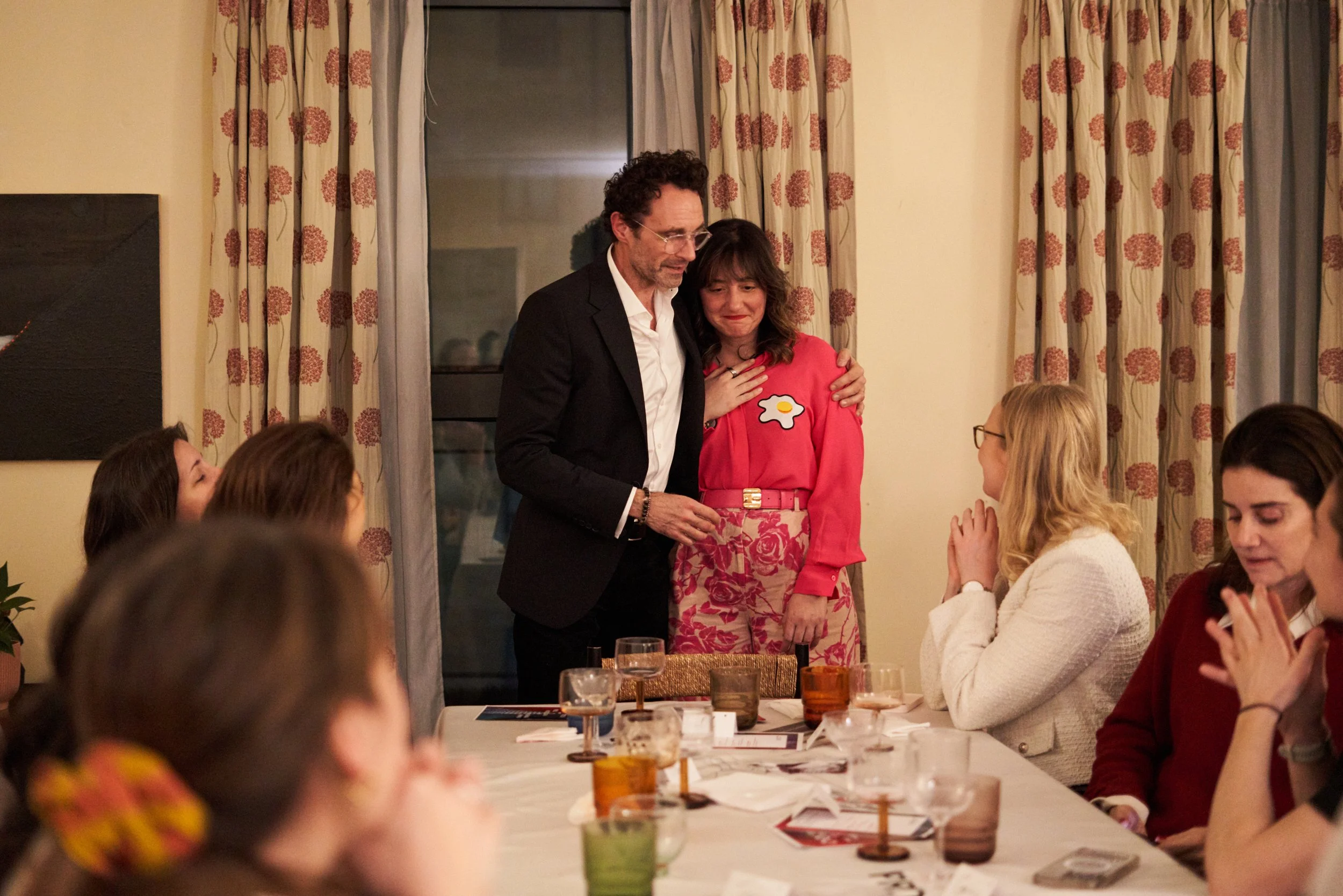
Image of Huma’s ‘Freudian Bites’ series: courtesy of Joanna Wierzbicka
When you imagine the future of the NHK Collection, what do you hope survives beyond the objects themselves?
The ethics of custodianship and the relationships and stories woven around the works, the sense that a collection is a living dialogue between generations and cultures rather than an archive. What I most hope survives is the practice of care itself, passed on.